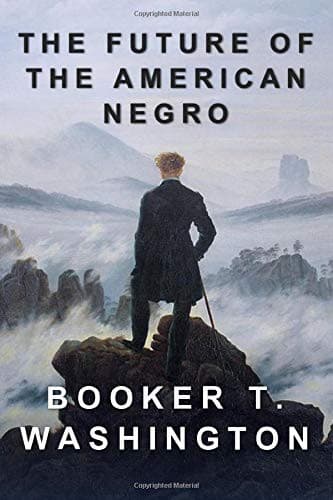
The Future of the American NegroWashington, Booker T.
History
The Future of the American Negro
Washington, Booker T.
African Americans
In my mind there is no doubt but that we made a mistake at the
beginning of our freedom of putting the emphasis on the wrong end.
Politics and the holding of office were too largely emphasised,
almost to the exclusion of every other interest.
I believe the past and present teach but one lesson,--to the Negro's
friends and to the Negro himself,--that there is but one way out, that
there is but one hope of solution; and that is for the Negro in every
part of America to resolve from henceforth that he will throw aside
every non-essential and cling only to essential,--that his pillar of
fire by night and pillar of cloud by day shall be property, economy,
education, and Christian character. To us just now these are the
wheat, all else the chaff. The individual or race that owns the
property, pays the taxes, possesses the intelligence and substantial
character, is the one which is going to exercise the greatest control
in government, whether he lives in the North or whether he lives in
the South.
I have often been asked the cause of and the cure for the riots that
have taken place recently in North Carolina and South Carolina.[1] I
am not at all sure that what I shall say will answer these questions
in a satisfactory way, nor shall I attempt to narrow my expressions to
a mere recital of what has taken place in these two States. I prefer
to discuss the problem in a broader manner.
[1] November, 1898.
In the first place, in politics I am a Republican, but have always
refrained from activity in party politics, and expect to pursue this
policy in the future. So in this connection I shall refrain, as I
always have done, from entering upon any discussion of mere party
politics. What I shall say of politics will bear upon the race problem
and the civilisation of the South in the larger sense. In no case
would I permit my political relations to stand in the way of my
speaking and acting in the manner that I believe would be for the
permanent interest of my race and the whole South.
In 1873 the Negro in the South had reached the point of greatest
activity and influence in public life, so far as the mere holding of
elective office was concerned. From that date those who have kept up
with the history of the South have noticed that the Negro has steadily
lost in the number of elective offices held. In saying this, I do not
mean that the Negro has gone backward in the real and more fundamental
things of life. On the contrary, he has gone forward faster than has
been true of any other race in history, under anything like similar
circumstances.
Public-domain text, read in full here on John Shaqi.
Reviews
Reviews
No reviews yet
Be the first to share your thoughts on this work.
Join the Discussion
Join the discussion
Sign in to leave a comment or review.
Sign InorCreate an account