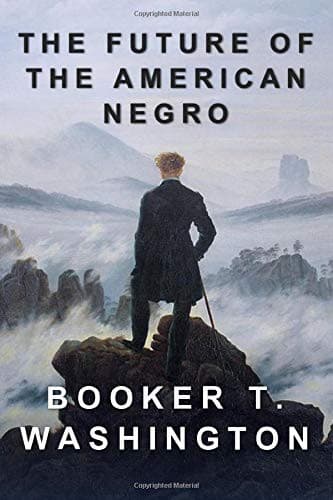
The Future of the American NegroWashington, Booker T.
History
The Future of the American Negro
Washington, Booker T.
African Americans
When, in 1776, the Negro was asked to decide between British
oppression and American independence, we find him choosing the better
part; and Crispus Attucks, a Negro, was the first to shed his blood on
State Street, Boston, that the white American might enjoy liberty
forever, though his race remained in slavery. When, in 1814, at New
Orleans, the test of patriotism came again, we find the Negro choosing
the better part, General Andrew Jackson himself testifying that no
heart was more loyal and no arm was more strong and useful in defence
of righteousness.
When the long and memorable struggle came between union and
separation, when he knew that victory meant freedom, and defeat his
continued enslavement, although enlisting by the thousands, as
opportunity presented itself, to fight in honourable combat for the
cause of the Union and liberty, yet, when the suggestion and the
temptation came to burn the home and massacre wife and children during
the absence of the master in battle, and thus insure his liberty, we
find him choosing the better part, and for four long years protecting
and supporting the helpless, defenceless ones intrusted to his care.
When, during our war with Spain, the safety and honour of the Republic
were threatened by a foreign foe, when the wail and anguish of the
oppressed from a distant isle reached our ears, we find the Negro
forgetting his own wrongs, forgetting the laws and customs that
discriminate against him in his own country, and again choosing the
better part. And, if any one would know how he acquitted himself in
the field at Santiago, let him apply for answer to Shafter and
Roosevelt and Wheeler. Let them tell how the Negro faced death and
laid down his life in defence of honour and humanity. When the full
story of the heroic conduct of the Negro in the Spanish-American War
has been heard from the lips of Northern soldier and Southern soldier,
from ex-abolitionist and ex-master, then shall the country decide
whether a race that is thus willing to die for its country should not
be given the highest opportunity to live for its country.
In the midst of all the complaints of suffering in the camp and field
during the Spanish-American War, suffering from fever and hunger,
where is the official or citizen that has heard a word of complaint
from the lips of a black soldier? The only request that came from the
Negro soldier was that he might be permitted to replace the white
soldier when heat and malaria began to decimate the ranks of the white
regiments, and to occupy at the same time the post of greater danger.
But, when all this is said, it remains true that the efforts on the
part of his friends and the part of himself to share actively in the
control of State and local government in America have not been a
success in all sections. What are the causes of this partial failure,
and what lessons has it taught that we may use in regard to the future
treatment of the Negro in America?
Public-domain text, read in full here on John Shaqi.
Reviews
Reviews
No reviews yet
Be the first to share your thoughts on this work.
Join the Discussion
Join the discussion
Sign in to leave a comment or review.
Sign InorCreate an account