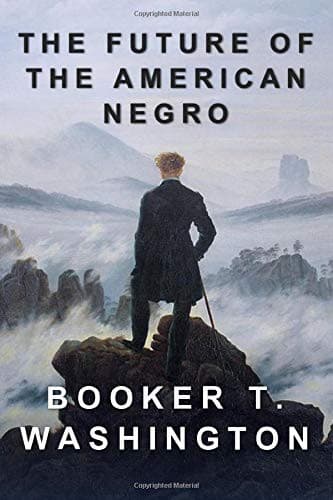
The Future of the American NegroWashington, Booker T.
History
The Future of the American Negro
Washington, Booker T.
African Americans
While I have spoken of the Negro's moral weakness, I hope it will be
kept in mind that in his original state his is an honest race. It was
slavery that corrupted him in this respect. But in morals he also has
his strong points.
Few have ever found the Negro guilty of betraying a trust. There are
almost no instances in which the Negro betrayed either a Federal or a
Confederate soldier who confided in him. There are few instances where
the Negro has been entrusted with valuables when he has not been
faithful. This country has never had a more loyal citizen. He has
never proven himself a rebel. Should the Southern States, which so
long held him in slavery, be invaded by a foreign foe, the Negro would
be among the first to come to the rescue.
Perhaps the most encouraging thing in connection with the lifting up
of the Negro in this country is the fact that he knows that he is down
and wants to get up, he knows that he is ignorant and wants to get
light. He fills every school-house and every church which is opened
for him. He is willing to follow leaders, when he is once convinced
that the leaders have his best interest at heart.
Under the constant influence of the Christian education which began
thirty-five years ago, his religion is every year becoming less
emotional and more rational and practical, though I, for one, hope
that he will always retain in a large degree the emotional element in
religion.
During the two hundred and fifty years that the Negro spent in
slavery he had little cause or incentive to accumulate money or
property. Thirty-five years ago this was something which he had to
begin to learn. While the great bulk of the race is still without
money and property, yet the signs of thrift are evident on every hand.
Especially is this noticeable in the large number of neat little homes
which are owned by these people on the outer edges of the towns and
cities in the South.
I wish to give an example of the sort of thing the Negro has to
contend with, however, in his efforts to lift himself up.
Public-domain text, read in full here on John Shaqi.
Reviews
Reviews
No reviews yet
Be the first to share your thoughts on this work.
Elsewhere in the archive
Join the Discussion
Join the discussion
Sign in to leave a comment or review.
Sign InorCreate an account