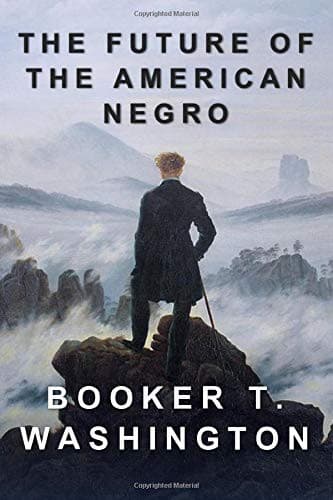
The Future of the American NegroWashington, Booker T.
History
The Future of the American Negro
Washington, Booker T.
African Americans
For a number of years the South has appealed to the North and to
federal authorities, through the public press, from the public
platform, and most eloquently through the late Henry W. Grady, to
leave the whole matter of the rights and protection of the Negro to
the South, declaring that it would see to it that the Negro would be
made secure in his citizenship. During the last half-dozen years the
whole country, from the President down, has been inclined more than
ever to pursue this policy, leaving the whole matter of the destiny of
the Negro to the Negro himself and to the Southern white people, among
whom the great bulk of Negroes live.
By the present policy of non-interference on the part of the North and
the federal government the South is given a sacred trust. How will she
execute this trust? The world is waiting and watching to see. The
question must be answered largely by the protection it gives to the
life of the Negro and the provisions that are made for his development
in the organic laws of the State. I fear that but few people in the
South realise to what an extent the habit of lynching, or the taking
of life without due process of law, has taken hold of us, and is
hurting us, not only in the eyes of the world, but in our own moral
and material growth.
Lynching was instituted some years ago with the idea of punishing and
checking criminal assaults upon women. Let us examine the facts, and
see where it has already led us and is likely further to carry us, if
we do not rid ourselves of the evil. Many good people in the South,
and also out of the South, have gotten the idea that lynching is
resorted to for one crime only. I have the facts from an authoritative
source. During last year one hundred and twenty-seven persons were
lynched in the United States. Of this number, one hundred and
eighteen were executed in the South and nine in the North and West. Of
the total number lynched, one hundred and two were Negroes,
twenty-three were whites, and two Indians. Now, let every one
interested in the South, his country, and the cause of humanity, note
this fact,--that only twenty-four of the entire number were charged in
any way with the crime of rape; that is, twenty-four out of one
hundred and twenty-seven cases of lynching. Sixty-one of the remaining
cases were for murder, thirteen for being suspected of murder, six for
theft, etc. During one week last spring, when I kept a careful record,
thirteen Negroes were lynched in three of our Southern States; and not
one was even charged with rape. All of these thirteen were accused of
murder or house-burning; but in neither case were the men allowed to
go before a court, so that their innocence or guilt might be proven.
When we get to the point where four-fifths of the people lynched in
our country in one year are for some crime other than rape, we can no
longer plead and explain that we lynch for one crime alone.
Public-domain text, read in full here on John Shaqi.
Reviews
Reviews
No reviews yet
Be the first to share your thoughts on this work.
Elsewhere in the archive
Join the Discussion
Join the discussion
Sign in to leave a comment or review.
Sign InorCreate an account