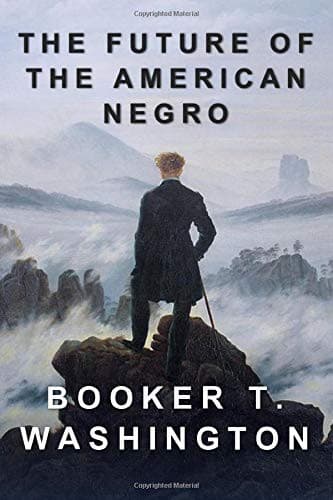
The Future of the American NegroWashington, Booker T.
History
The Future of the American Negro
Washington, Booker T.
African Americans
We are one in this country. The question of the highest citizenship
and the complete education of all concerns nearly ten millions of my
people and sixty millions of the white race. When one race is strong,
the other is strong; when one is weak, the other is weak. There is no
power that can separate our destiny. Unjust laws and customs which
exist in many places injure the white man and inconvenience the Negro.
No race can wrong another race, simply because it has the power to do
so, without being permanently injured in its own morals. The Negro can
endure the temporary inconvenience, but the injury to the white man is
permanent. It is for the white man to save himself from this
degradation that I plead. If a white man steals a Negro's ballot, it
is the white man who is permanently injured. Physical death comes to
the one Negro lynched in a county; but death of the morals--death of
the soul--comes to those responsible for the lynching.
Those who fought and died on the battlefield for the freedom of the
slaves performed their duty heroically and well, but a duty remains to
those left. The mere fiat of law cannot make an ignorant voter an
intelligent voter, cannot make a dependent man an independent man,
cannot make one citizen respect another. These results will come to
the Negro, as to all races, by beginning at the bottom and gradually
working up to the highest possibilities of his nature.
In the economy of God there is but one standard by which an individual
can succeed: there is but one for a race. This country expects that
every race shall measure itself by the American standard. During the
next half-century, and more, the Negro must continue passing through
the severe American crucible. He is to be tested in his patience, his
forbearance, his perseverance, his power to endure wrong,--to
withstand temptations, to economise, to acquire and use skill,--his
ability to compete, to succeed in commerce, to disregard the
superficial for the real, the appearance for the substance, to be
great and yet small, learned and yet simple, high and yet the servant
of all. This,--this is the passport to all that is best in the life of
our Republic; and the Negro must possess it or be barred out.
In working out his own destiny, while the main burden of activity must
be with the Negro, he will need in the years to come, as he has needed
in the past, the help, the encouragement, the guidance, that the
strong can give the weak. Thus helped, those of both races in the
South will soon throw off the shackles of racial and sectional
prejudice, and rise above the clouds of ignorance, narrowness, and
selfishness into that atmosphere, that pure sunshine, where it will be
the highest ambition to serve man, our brother, regardless of race or
previous condition.
CHAPTER VIII.
Public-domain text, read in full here on John Shaqi.
Reviews
Reviews
No reviews yet
Be the first to share your thoughts on this work.
Elsewhere in the archive
Join the Discussion
Join the discussion
Sign in to leave a comment or review.
Sign InorCreate an account