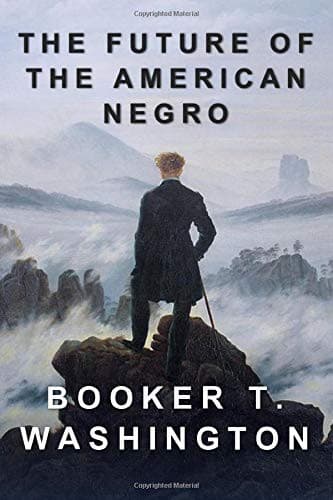
The Future of the American NegroWashington, Booker T.
History
The Future of the American Negro
Washington, Booker T.
African Americans
The Negro in the South has it within his power, if he properly
utilises the forces at hand, to make of himself such a valuable factor
in the life of the South that he will not have to seek privileges,
they will be freely conferred upon him. To bring this about, the Negro
must begin at the bottom and lay a sure foundation, and not be lured
by any temptation into trying to rise on a false foundation. While the
Negro is laying this foundation he will need help, sympathy, and
simple justice. Progress by any other method will be but temporary and
superficial, and the latter end of it will be worse than the
beginning. American slavery was a great curse to both races, and I
would be the last to apologise for it; but, in the presence of God, I
believe that slavery laid the foundation for the solution of the
problem that is now before us in the South. During slavery the Negro
was taught every trade, every industry, that constitutes the
foundation for making a living. Now, if on this foundation--laid in
rather a crude way, it is true, but a foundation, nevertheless--we can
gradually build and improve, the future for us is bright. Let me be
more specific. Agriculture is, or has been, the basic industry of
nearly every race or nation that has succeeded. The Negro got a
knowledge of this during slavery. Hence, in a large measure, he is in
possession of this industry in the South to-day. The Negro can buy
land in the South, as a rule, wherever the white man can buy it, and
at very low prices. Now, since the bulk of our people already have a
foundation in agriculture, they are at their best when living in the
country, engaged in agricultural pursuits. Plainly, then, the best
thing, the logical thing, is to turn the larger part of our strength
in a direction that will make the Negro among the most skilled
agricultural people in the world. The man who has learned to do
something better than any one else, has learned to do a common thing
in an uncommon manner, is the man who has a power and influence that
no adverse circumstances can take from him. The Negro who can make
himself so conspicuous as a successful farmer, a large tax-payer, a
wise helper of his fellow-men, as to be placed in a position of trust
and honour, whether the position be political or otherwise, by natural
selection, is a hundred-fold more secure in that position than one
placed there by mere outside force or pressure. I know a Negro, Hon.
Isaiah T. Montgomery, in Mississippi, who is mayor of a town. It is
true that this town, at present, is composed almost wholly of Negroes.
Mr. Montgomery is mayor of this town because his genius, thrift, and
foresight have created the town; and he is held and supported in his
office by a charter, granted by the State of Mississippi, and by the
vote and public sentiment of the community in which he lives.
Public-domain text, read in full here on John Shaqi.
Reviews
Reviews
No reviews yet
Be the first to share your thoughts on this work.
Elsewhere in the archive
Join the Discussion
Join the discussion
Sign in to leave a comment or review.
Sign InorCreate an account