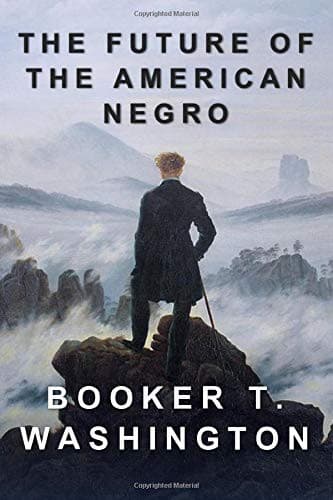
The Future of the American NegroWashington, Booker T.
History
The Future of the American Negro
Washington, Booker T.
African Americans
In a certain town in the South, recently, I was on the street in
company with the most prominent Negro in the town. While we were
together, the mayor of the town sought out the black man, and said,
"Next week we are going to vote on the question of issuing bonds to
secure water-works for this town; you must be sure to vote on the day
of election." The mayor did not suggest whether he must vote "yes" or
"no"; he knew from the very fact that this Negro man owned nearly a
block of the most valuable property in the town that he would cast a
safe, wise vote on this important proposition. This white man knew
that, because of this Negro's property interests in the city, he would
cast his vote in the way he thought would benefit every white and
black citizen in the town, and not be controlled by influences a
thousand miles away. But a short time ago I read letters from nearly
every prominent white man in Birmingham, Alabama, asking that the Rev.
W. R. Pettiford, a Negro, be appointed to a certain important federal
office. What is the explanation of this? Mr. Pettiford for nine years
has been the president of the Negro bank in Birmingham to which I have
alluded. During these nine years these white citizens have had the
opportunity of seeing that Mr. Pettiford could manage successfully a
private business, and that he had proven himself a conservative,
thoughtful citizen; and they were willing to trust him in a public
office. Such individual examples will have to be multiplied until they
become the rule rather than the exception. While we are multiplying
these examples, the Negro must keep a strong and courageous heart. He
cannot improve his condition by any short-cut course or by artificial
methods. Above all, he must not be deluded into the temptation of
believing that his condition can be permanently improved by a mere
battledore and shuttlecock of words or by any process of mere mental
gymnastics or oratory alone. What is desired, along with a logical
defence of his cause, are deeds, results,--multiplied results,--in the
direction of building himself up, so as to leave no doubt in the minds
of any one of his ability to succeed.
An important question often asked is, Does the white man in the South
want the Negro to improve his present condition? I say, "Yes." From
the Montgomery (Alabama) _Daily Advertiser_ I clip the following in
reference to the closing of a coloured school in a town in Alabama:--
"EUFAULA, May 25, 1899.
Public-domain text, read in full here on John Shaqi.
Reviews
Reviews
No reviews yet
Be the first to share your thoughts on this work.
Elsewhere in the archive
Join the Discussion
Join the discussion
Sign in to leave a comment or review.
Sign InorCreate an account