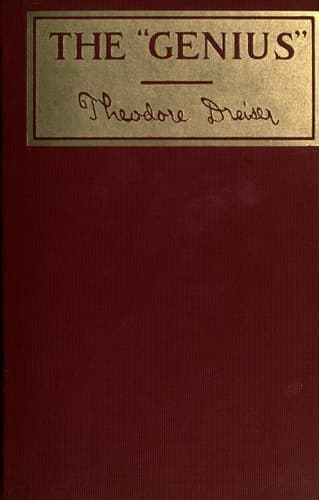
Artists -- Relations with women -- Fiction; Artists -- United States -- Fiction
so far as it was concerned, what he thought he wanted. And Angela
interpreted her power to respond to what seemed his inexhaustible desire
as not only a kindness but a duty.
Eugene set up his easel here, painted from nine to noon some days, and
on others from two to five in the afternoon. If it were dark, he would
walk or ride with Angela or visit the museums, the galleries and the
public buildings or stroll in the factory or railroad quarters of the
city. Eugene sympathized most with sombre types and was constantly
drawing something which represented grim care. Aside from the dancers in
the music halls, the toughs, in what later became known as the Apache
district, the summer picnicking parties at Versailles and St. Cloud, the
boat crowds on the Seine, he drew factory throngs, watchmen and railroad
crossings, market people, market in the dark, street sweepers, newspaper
vendors, flower merchants, always with a memorable street scene in the
background. Some of the most interesting bits of Paris, its towers,
bridges, river views, facades, appeared in backgrounds to the grim or
picturesque or pathetic character studies. It was his hope that he could
interest America in these things--that his next exhibition would not
only illustrate his versatility and persistence of talent, but show an
improvement in his art, a surer sense of color values, a greater
analytical power in the matter of character, a surer selective taste in
the matter of composition and arrangement. He did not realize that all
this might be useless--that he was, aside from his art, living a life
which might rob talent of its finest flavor, discolor the aspect of the
world for himself, take scope from imagination and hamper effort with
nervous irritation, and make accomplishment impossible. He had no
knowledge of the effect of one's sexual life upon one's work, nor what
such a life when badly arranged can do to a perfect art--how it can
distort the sense of color, weaken that balanced judgment of character
which is so essential to a normal interpretation of life, make all
striving hopeless, take from art its most joyous conception, make life
itself seem unimportant and death a relief.
CHAPTER IX
Public-domain text, read in full here on John Shaqi.
Reviews
Reviews
No reviews yet
Be the first to share your thoughts on this work.
Elsewhere in the archive
Join the Discussion
Join the discussion
Sign in to leave a comment or review.
Sign InorCreate an account