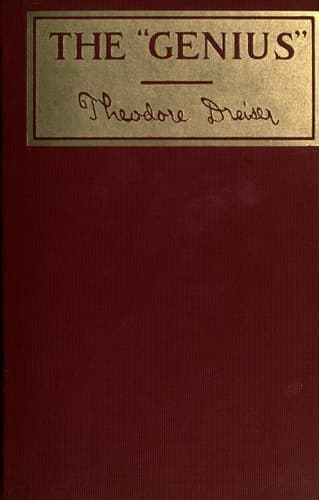
Artists -- Relations with women -- Fiction; Artists -- United States -- Fiction
good health, all had to appear at their posts on the tick of the clock,
all had to perform faithfully the duties assigned them, or there would
be disasters. Most of them had climbed by long, arduous years of work to
very modest positions of prominence, as conductors, engineers, foremen,
division superintendents. Others more gifted or more blessed by fortune
became division engineers, superintendents, vice-presidents and
presidents. They were all slow climbers, rigid in their sense of duty,
tireless in their energy, exact, thoughtful. What was he?
He looked into the well of his being and there he saw nothing but shifty
and uncertain currents. It was very dark down there. He was not honest,
he said to himself, except in money matters--he often wondered why. He
was not truthful. He was not moral. This love of beauty which haunted
him seemed much more important than anything else in the world, and his
pursuit of that seemed to fly in the face of everything else which was
established and important. He found that men everywhere did not think
much of a man who was crazy after women. They might joke about an
occasional lapse as an amiable vice or one which could be condoned, but
they wanted little to do with a man who was overpowered by it. There was
a case over in the railroad yard at Speonk recently which he had noted,
of a foreman who had left his wife and gone after some hoyden in White
Plains, and because of this offense he was promptly discharged. It
appeared, though, that before this he had occasionally had such lapses
and that each time he had been discharged, but had been subsequently
forgiven. This one weakness, and no other, had given him a bad
reputation among his fellow railroad men--much as that a drunkard might
have. Big John Peters, the engineer, had expressed it aptly to Eugene
one day when he told him in confidence that "Ed Bowers would go to hell
for his hide," the latter being the local expression for women.
Everybody seemed to pity him, and the man seemed in a way to pity
himself. He had a hang-dog look when he was re-instated, and yet
everybody knew that apart from this he was a fairly competent foreman.
Still it was generally understood that he would never get anywhere.
Public-domain text, read in full here on John Shaqi.
Reviews
Reviews
No reviews yet
Be the first to share your thoughts on this work.
Elsewhere in the archive
Join the Discussion
Join the discussion
Sign in to leave a comment or review.
Sign InorCreate an account