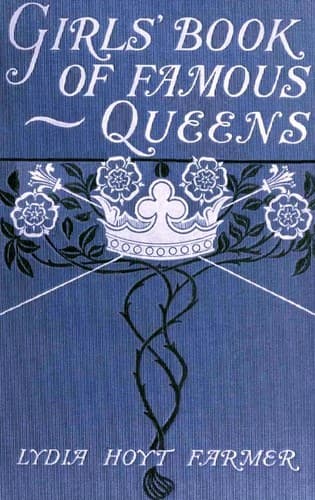
The Girls' Book of Famous QueensFarmer, Lydia Hoyt
History
The Girls' Book of Famous Queens
Farmer, Lydia Hoyt
Queens -- Biography -- Juvenile literature
Music was much in fashion in Elizabeth’s court, and she excelled Mary,
Queen of Scots, on keyed instruments, though Mary played best upon
the lute. An instrument resembling a small guitar was much used as an
accompaniment to the voice.
Elizabeth gave little patronage to painting or architecture; the
former art she encouraged only so far as regarded the multiplication
of pictures of herself. At length so many were the poor portraits of
her which appeared, and were mostly caricatures of her royal face and
person, that the queen issued a proclamation prohibiting all persons
from drawing, painting, or engraving her countenance or figure, until
some perfect pattern should be made by a skilful limner. But her
painters did not flatter her as much as her poets.
“The portraits remaining of Elizabeth show how vile, how tawdry, and
how vulgar was her taste in art. They could hardly be fine enough to
please her; they seem all made up of jewels, crowns, and frizzled
hair, powdered with diamonds, and ruffs and cuffs and farthingales and
things; and from the midst of this superfluity of ornament, her pinched
Roman nose, thin lips, and sharp eyes peer out with a very disagreeable
effect, quite contrary to all our ideas of grace or majesty.” She was
so little capable of judging a work of art that she would not allow a
painter to put any shadows upon the face, because, she said, “shade is
an accident, and not in nature.”
Many stories are told illustrating Elizabeth’s extreme vanity. Sir John
Harrington relates:—
“That Lady M. Howard was possessed of a rich border powdered with golde
and pearle, and a velvet suite belonging thereto, which moved many
to envye; nor did it please the queene, who thought it exceeded her
own. One daye the queene did sende privately, and got the lady’s rich
vesture, which she put on herself, and came forthe the chamber among
the ladies. The kirtle and border was far too shorte for her majestie’s
height, and she asked every one how they liked her new-fancied suit. At
length she asked the owner herself ‘if it was not made too short and
ill-becoming,’ which the poor ladie did presentlie consent to. ‘Why,
then, if it become not me as being too shorte, I am minded it shall
never become thee as being too fine; so it fitteth neither well.’ This
sharp rebuke abashed the ladie, and she never adorned herself herewith
any more.”
Public-domain text, read in full here on John Shaqi.
Reviews
Reviews
No reviews yet
Be the first to share your thoughts on this work.
Elsewhere in the archive
Join the Discussion
Join the discussion
Sign in to leave a comment or review.
Sign InorCreate an account