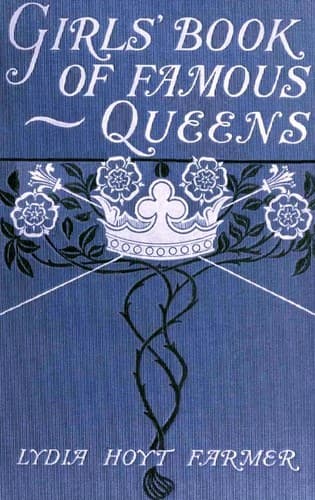
The Girls' Book of Famous QueensFarmer, Lydia Hoyt
History
The Girls' Book of Famous Queens
Farmer, Lydia Hoyt
Queens -- Biography -- Juvenile literature
At this very time he and his mother had planned to lure the leaders of
the Protestants to Paris as their guests for the celebration of the
wedding festivities; when at the dire signal they were to be butchered
in cold blood. After receiving the queen of Navarre with every
manifestation of love, when the French king quite overacted his part,
calling Jeanne d’Albret, “his great aunt, his all, his best beloved,”
the following dialogue is said to have occurred between Catherine and
Charles, after the queen of Navarre had retired.
“Well, mother,” said Charles laughing, “what do you think of it? Do I
play my little part well?”
“Yes,” replied Catherine, “well; but it is of no use unless it
continues.”
“Allow me to go on,” said this debased king, “and you will see that I
shall ensnare them.”
And ensnare them they did truly. Hardly had the queen of Navarre
entered the sumptuous apartments provided for her in the court of
Catherine, ere she was seized with a violent fever which continued nine
days, when she died.
Henry, her son, had not yet arrived in Paris, but was travelling there
more slowly with his retinue. Catherine exhibited the most ostentatious
demonstrations of grief. Charles IX. uttered the loudest lamentations,
and displayed the most poignant sorrow. Notwithstanding these efforts
to allay suspicions, the report spread through France and Europe that
the queen of Navarre had been perfidiously poisoned by Catherine de’
Medici. The Protestant writers assert that Jeanne d’Albret fell a
victim to poison, communicated by a pair of perfumed gloves. The
Catholics as firmly declare that she died from natural causes. The
truth cannot be ascertained.
But after events make the supposition very strong that Jeanne d’Albret
was the first victim in the massacre of St. Bartholomew. Her death
necessarily delayed the marriage for a short time, but at length the
nuptial day arrived. The Admiral Coligni was with other prominent
Protestants lured to Paris. When friends urged him to remain at home
and not trust the protestations of the perfidious queen, Coligni, who
was much attached to Henry, now the king of Navarre, replied:—
“I confide in the sacred word of his majesty.”
But poor Henry was as great a dupe as any, and he was completely
deceived by the cunning wiles of this diabolical mother and son.
Public-domain text, read in full here on John Shaqi.
Reviews
Reviews
No reviews yet
Be the first to share your thoughts on this work.
Elsewhere in the archive
Join the Discussion
Join the discussion
Sign in to leave a comment or review.
Sign InorCreate an account