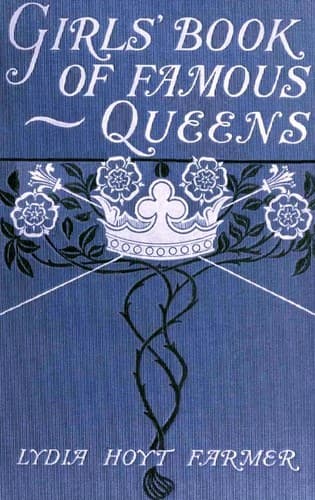
The Girls' Book of Famous QueensFarmer, Lydia Hoyt
History
The Girls' Book of Famous Queens
Farmer, Lydia Hoyt
Queens -- Biography -- Juvenile literature
We cannot give details, but during these contests, which became
religious wars, Henry of Guise was assassinated and the corpse was
kicked in the face by Henry III., who afterwards repaired to the
sick-bed of Catherine de’ Medici, and exclaimed:—
“I have made myself this morning king of France by putting to death the
king of Paris,” which was the title given to the Duke of Guise.
“Take care,” replied his heartless mother, “that you do not soon find
yourself _king of nothing_!”
And king of nothing he soon was, though Catherine de’ Medici did not
live to see his downfall. In twelve days after she had thus heard,
without the slightest emotion, of the assassination of the duke who
had been her most zealous worker in the infamous Massacre of St.
Bartholomew, this iniquitous queen,—the personification of every vice,
who had lured all around her to destruction, who had been always
accompanied by bands of the most profligate but beautiful women,
known as her infamous _Flying Squadron_, who by their fascinating
wiles should secure the victims her own cunning could not reach; this
woman,—without a single redeeming virtue, despised by the Catholics,
and hated by the Protestants, and execrated by the world,—this fiendish
spirit was at length the prey of the grim conqueror, Death.
Seven months after the death of Catherine de’ Medici, Henry III. was
assassinated by a monk, and Henry of Navarre was proclaimed king of
France as Henry IV. Thus had all Catherine de’ Medici’s vile scheming
come to naught. She and her sons died with the curses of the nation on
their heads, while the son of the illustrious and faithful Huguenot,
Jeanne d’Albret, sat upon the throne of France.
QUEEN ANNE.
A.D. 1664-1714.
“A partial world will listen to my lays,
While Anna reigns, and sets a female name
Unrivall’d in the glorious lists of fame.”—YOUNG.
SOME monarchs make their reign illustrious by their own individual
characters and famous deeds; other sovereigns are illustrious only
because their reigns have been important epochs in the annals of
history, irrespective of any merits of their own or any renowned
actions or policies on their part. Upon the importance of certain
political and religious aspects of the times of the “Good Queen Anne”
rest all her claims to be enrolled upon the lists of fame.
Public-domain text, read in full here on John Shaqi.
Reviews
Reviews
No reviews yet
Be the first to share your thoughts on this work.
Elsewhere in the archive
Join the Discussion
Join the discussion
Sign in to leave a comment or review.
Sign InorCreate an account