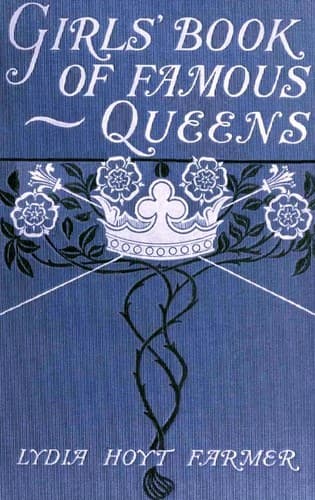
The Girls' Book of Famous QueensFarmer, Lydia Hoyt
History
The Girls' Book of Famous Queens
Farmer, Lydia Hoyt
Queens -- Biography -- Juvenile literature
But Maria Theresa was never so great as in the midst of apparently
overwhelming adversity. Hungary clung firmly to the young and dauntless
queen, and to Hungary she turned for aid. On the 13th of June, 1741,
she was crowned Queen of Hungary at Presburg. The coronation was
attended with all the national pomp and peculiar ceremonies of that
country. The iron crown of St. Stephen was placed upon the head of
the dazzlingly beautiful Maria Theresa, then in the height of her
fascinating charms. Over her gem-encrusted royal robes was thrown
the sacred tattered mantle which was regarded by the Hungarians as a
revered insignia of the regal office. Mounted on a superb charger, she
then rode gallantly up the Royal Mount, which was a rising hillock near
Presburg consecrated to this ceremony; and having reached the summit,
Maria Theresa, according to ancient custom, drew forth her glistening
sabre, and waved it around her head, signalizing the idea of defiance
to all the four quarters of the world. The coronation ceremonies having
been completed, Maria Theresa returned to the great hall of the palace,
where a magnificent feast had been spread for all the high dignitaries
of the realm. The beautiful queen sat in the place of honor; and as
the day was warm and the iron crown was heavy, she lifted the ancient
diadem from her brow, whereupon her luxuriant hair fell upon her
shoulders in picturesque abandon, making her such a vision of beauty
with her glowing cheeks, and sparkling eyes, and regal bearing, that
the old knights and gallant lords could scarce refrain from shouting
their enthusiastic admiration for the lovely woman, and patriotic
reverence for their adored queen, in resounding acclamations.
Still greater was their enthusiasm when they were assembled in the
great hall of the castle, and the stately queen, wearing the Hungarian
mourning costume in memory of her late father, entered the spacious
apartment, and ascended the platform from whence the kings of Hungary
had been accustomed to address their council of lords.
Imperial indeed was the graceful Maria Theresa; majesty sat enthroned
upon her regal brow, and the sovereign as well as the gracious woman
beamed in her magnetic eyes, while the melodious and alluring tones
of her pathetic voice seemed to commingle the inspiring resonance of
a bugle-call with the melting sweetness of the rich chords swept from
harp-strings, as she alternately appealed to their patriotism, and her
helpless condition as queen, woman, and mother. Her stirring address to
them was made in Latin, and as she impressively committed herself and
children to their fidelity, lifting her infant son Joseph in her arms
and presenting him to the assembled lords, a thousand warriors drew
their sabres from their scabbards and shouted with wild enthusiasm:
“_Moriamur pro rege nostro, Mariâ Theresâ_” (We will die for our
sovereign, Maria Theresa).
Public-domain text, read in full here on John Shaqi.
Reviews
Reviews
No reviews yet
Be the first to share your thoughts on this work.
Elsewhere in the archive
Join the Discussion
Join the discussion
Sign in to leave a comment or review.
Sign InorCreate an account