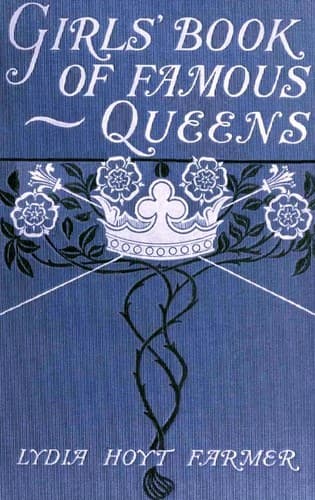
The Girls' Book of Famous QueensFarmer, Lydia Hoyt
History
The Girls' Book of Famous Queens
Farmer, Lydia Hoyt
Queens -- Biography -- Juvenile literature
Marie Antoinette had been reared in all the freedom of the Austrian
court, and it was some time before she could habituate herself to the
etiquette-laden atmosphere of Versailles, where every look, every
motion, every gesture, were governed alike by the inexorable rules of
_la grande politesse_, laid down with such precision and exactitude by
King Louis XIV. From the cradle to the tomb, in sickness and in health,
at table, at council, in the chase, in the army, in the midst of their
court, and in their private apartments, kings and princes, in France,
were governed by ceremonial rules. The pomp and glitter at Versailles
dazzled the beholder. There all breathed of greatness, of exaltation,
and of unapproachableness; and the people, awestruck at the splendor
and gorgeous trappings of royalty, fell prostrate before the throne.
Madame Campan thus describes her feelings upon first entering this
charmed spot:—
“The queen, Marie Leckzinska, wife of Louis XV., died just before I was
presented at court. The grand apartments hung with black, the great
chairs of state raised on several steps and surmounted by a canopy
adorned with plumes, the caparisoned horses, the immense retinue in
court mourning, the enormous shoulder-knots embroidered with gold and
silver spangles which decorated the coats of the pages and footmen,—all
this magnificence had such an effect upon my senses, that I could
scarcely support myself when introduced to the princesses.
“How well was the potent magic of grandeur and dignity, which ought to
surround sovereigns, understood at Versailles!
“Marie Antoinette, dressed in white, with a plain straw hat, and a
little switch in her hand, walking on foot, and followed by a single
servant, through the walks leading to the Petit Trianon, would never
have thus disconcerted me. And I believe this extreme simplicity was
the _first_ and only _real_ fault of all those with which she is
reproached.”
The illusions of etiquette were necessary to Louis XV. Louis XIV. might
have dispensed with them. His throne, resplendent with the triumph
of arms, literature, and the fine arts, was glorious enough without
them. But he would be more than a great king, this mighty Louis! And
so this demi-god, when age and calamity had taught him that he was
but human, endeavored to conceal the ravages of time and of disease
beneath the vain pomp of ceremony. He, Louis “the Magnificent,” the
most accomplished of gentlemen, habitually exacted and received from
the noblest of his realm adulations and menial services better becoming
the palace of Ispahan than the Château of Versailles.
Public-domain text, read in full here on John Shaqi.
Reviews
Reviews
No reviews yet
Be the first to share your thoughts on this work.
Elsewhere in the archive
Join the Discussion
Join the discussion
Sign in to leave a comment or review.
Sign InorCreate an account