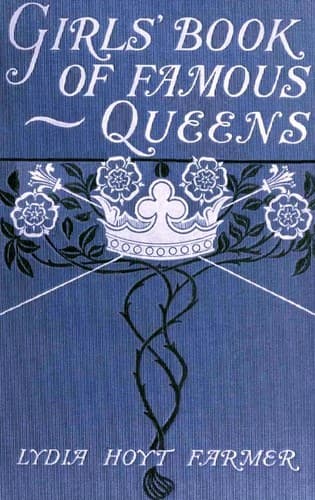
The Girls' Book of Famous QueensFarmer, Lydia Hoyt
History
The Girls' Book of Famous Queens
Farmer, Lydia Hoyt
Queens -- Biography -- Juvenile literature
No eye was closed at Versailles that night, unless, perchance, it
was that of the king, Louis XVI.; for all felt the counter-shock of
that terrible concussion with which Paris was still trembling. The
French guards, the bodyguards, and the Swiss, drawn up in platoons and
grouped near the openings of all the principal streets, were conversing
among themselves, or with those of the citizens whose fidelity to the
monarchy inspired them with confidence; for Versailles has at all times
been a royalist city. Religious respect for the monarchy and for the
monarch was ingrafted in the hearts of its inhabitants as if it were a
quality of its soil. Having always lived near kings, fostered by their
bounty, beneath the shade of their wonders, having always inhaled the
intoxicating perfume of the _fleur-de-lys_, and seen the brilliant gold
of the garments, and the smiles upon the august lips of royalty, the
inhabitants of Versailles, for whom kings had built a city of marble
and porphyry, felt almost kings themselves; and, even at the present
day,—even now, when the splendid palace of _Louis Quatorze_ stands
silent in its grandeur; when no longer the marble court is thronged
with gorgeous equipages, and
“Up the chestnut alley, all in flower so white and pure,
Strut the red and yellow lacqueys of the Madame Pompadour;”
when the vast gardens where once Louis, the _Grand Monarque_,
surrounded by his train of lords and ladies, moved majestic, “monarch
of all he surveyed and of all who surveyed him,” are silent and
deserted;—even now, Versailles must either belie its origin, or,
considering itself as a fragment of the fallen monarchy, and no longer
feeling the pride of power and wealth, must at least retain the
poetical associations of regret and the sovereign charms of melancholy.
By his answer to the Marquis de Brézé, Mirabeau had struck the very
face of royalty.
By the taking of the Bastile, the people had struck it to the heart,
paralyzed its nerves of action, and given it a death-blow. “But the
monarch of France, from his palace at Versailles, heard the thunders
of the distant cannonade, and yet inscribed upon his puerile journal,
‘_Nothing!_’”
“Whom the gods would destroy they first make mad;” and the adage
applies fitly to the French court during the six months preceding the
overthrow. Never had the nobles been so haughty and domineering. Never
had they looked upon the people with such supreme contempt. Their
arrogance passed all bounds. Even Marie Antoinette exclaimed in terror,
“This _noblesse_ will ruin us!”
Public-domain text, read in full here on John Shaqi.
Reviews
Reviews
No reviews yet
Be the first to share your thoughts on this work.
Elsewhere in the archive
Join the Discussion
Join the discussion
Sign in to leave a comment or review.
Sign InorCreate an account