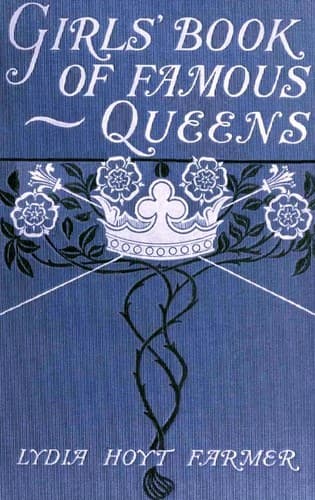
The Girls' Book of Famous QueensFarmer, Lydia Hoyt
History
The Girls' Book of Famous Queens
Farmer, Lydia Hoyt
Queens -- Biography -- Juvenile literature
Upon the following day the council was again assembled with the
imperial family in the grand _salon_ at the Tuileries, to witness the
legal consummation of the divorce.
All were in court costume. Napoleon entered the apartment, clothed in
the imposing robes of state. Pale as a corpse, he stood leaning against
a pillar, with folded arms, motionless as a statue.
Again the poor victim of this cruel sacrifice must appear. The
keen-edged knife of the political guillotine of blind ambition must
this day perform its final act of political decapitation.
The door opens; a sad figure appears. Some reports clothe this
sorrowful, weeping woman in white muslin; others in black satin. As the
latter seems more fitting: to this funereal scene, we incline to that
supposition, which would surely appear more appropriate than bridal
white for this moment of public repudiation.
The graceful woman, bending like a weeping-willow before the storm of
sorrow which is crushing her to the earth, walks slowly to the seat
prepared for her, followed by her son and daughter. The pallor of
death is upon her brow. A coffin would have seemed less cruel than the
mocking chair of state waiting for her. Had she been Marie Antoinette
upon the scaffold, she could scarcely have suffered more; for Marie
Antoinette could at least love her dead husband without reproach; while
the living husband of poor Josephine holds in his hand the cruel dagger
which is piercing her bleeding heart, and his word tears from her brow
her rightful royal diadem of wifehood.
The iniquitous decree is read. The quivering victim must pronounce her
own sentence. Pressing her handkerchief to her streaming eyes for a
moment, she slowly rises, and the oath of acceptance passes her pallid
lips. The pen is handed to her, and she signs her own _death-warrant_;
and then glides like a mournful spectre from the grand _salon_ of
state, the imperial grandeur of which, together with the presence of
her triumphant foes, mock her unutterable woe.
It is the evening of the same day. The weeping woman has still another
heart-rending duty to perform. She must take her final farewell of
the man who has stabbed her to the heart; of the husband whom she
still adores with every heart-beat of her loyal, loving soul; of the
emperor who has crowned her, only to tear from her brow his royal
gift and bestow it upon another. Was ever woman’s soul torn with such
conflicting emotions? Pride and love have fought a terrible battle
within her heart, since the cruel public sacrifice of the morning. But
love has conquered; yes, so royally conquered, that there is no place
left in her soul for aught but overpowering devotion to the adored
husband of her heart.
Public-domain text, read in full here on John Shaqi.
Reviews
Reviews
No reviews yet
Be the first to share your thoughts on this work.
Elsewhere in the archive
Join the Discussion
Join the discussion
Sign in to leave a comment or review.
Sign InorCreate an account