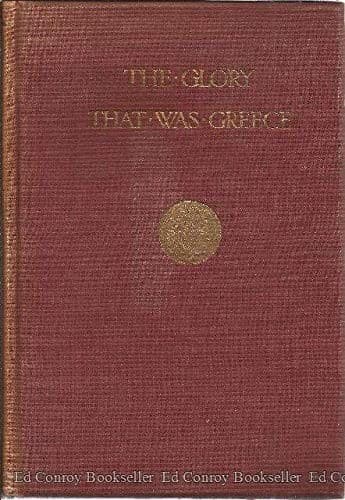
The Glory That Was Greece: a survey of Hellenic culture and civilisationStobart, J. C. (John Clarke)
History
The Glory That Was Greece: a survey of Hellenic culture and civilisation
Stobart, J. C. (John Clarke)
Art, Greek; Greece -- Civilization -- To 146 B.C.
Great as Pheidias is, he is nevertheless surrounded by a circle of
sculptors and architects, engravers and painters, who are all great. In
execution they may be ranked in grades of ability, and their
individualities are clearly discernible, but they are all inspired by
the same nobility of artistic character, so that the spirit of
fifth-century art is a thing that the eye can easily perceive. Reserve
and dignity are its most prominent characteristics. It shares with all
Greek art the
[Illustration: PLATE XLVI. STATUE OF MARSYAS. AFTER MYRON
_Mansell & Co._]
qualities of grace and directness, by which we mean a vivid and logical
intelligence which knows its aim and pursues it unswervingly.
Pheidias had Myron for a fellow-student. Of Myron’s athletic work I have
already spoken. He was as original as it was possible to be in the fifth
century. As he was chiefly engaged in minor works of a private and
occasional nature, he has naturally caught the attention of the
epigrammatists. We hear much of the animal statues he carved and of
their extraordinary realism, for that was the thing that appealed to the
ancient art critic. He seems to have been a master of bronze technique
and a skilful goldsmith. The marble copy of his Marsyas in the Lateran
and the bronze in the British Museum[55] show the satyr advancing in
amazement to pick up the flute which Apollo has just discarded. As in
the “Discobolus,” we see the love of distorted poses which enabled Myron
to exhibit his fine draughtsmanship and anatomy. Herein, indeed, he is
_peu cinquième siècle_; but we must remember that this figure is one of
a dramatic group. I have spoken of Polycleitus too as an athletic
sculptor. It is rather remarkable that this youthful art should already
in the fifth century be producing its “Canon” and its technical
treatises. Though the “Doryphorus” is the most famous of his works, the
head of his “Diadumenus” from Rome is probably the most faithful
rendering of a Polycleitan original. Other names are mentioned by
ancient writers as being worthy to be classed with Pheidias; Calamis,
for example; but they are mere names to us, and the ingenious attempts
of modern archæology to fit them with appropriate works on the score of
qualities attributed to them by ancient critics are hazardous, and for
the most part unsatisfactory. Considering the few facts so recorded and
the multitude of difficulties they raise, we cannot put much faith in
the ancient art critic. Alcamenes and Pæonius, for example, are said to
have been the sculptors of the two pediments at Olympia, and yet
Alcamenes is described as a pupil of Pheidias, which to any one
comparing the Apollo of the west pediment with the pedimental sculptures
of the Parthenon is absurd. The other name is also doubtful, for Pæonius
was the author of the famous Victory at Olympia,[56] with its superb
study of flying drapery. The inscription testifies that it was set up by
Public-domain text, read in full here on John Shaqi.
Reviews
Reviews
No reviews yet
Be the first to share your thoughts on this work.
Elsewhere in the archive
Join the Discussion
Join the discussion
Sign in to leave a comment or review.
Sign InorCreate an account