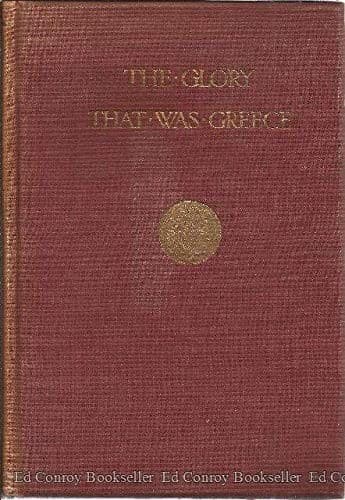
The Glory That Was Greece: a survey of Hellenic culture and civilisationStobart, J. C. (John Clarke)
History
The Glory That Was Greece: a survey of Hellenic culture and civilisation
Stobart, J. C. (John Clarke)
Art, Greek; Greece -- Civilization -- To 146 B.C.
palace is found to be Orestes come home for revenge. The so-called
Aristotelian “unities,” which have loomed so bulkily in the history of
dramatic criticism, and under the fear of which the classical dramatists
of France were imprisoned, are not to be found in Aristotle. He does,
indeed, advocate unity of subject, but unity of time and place are
nowhere demanded. The natural limitations and the consequent simplicity
of the Greek stage generally imposed these unities as a practical
necessity.
Greek simplicity is often, as we have seen, a studiously contrived
impression and the result of elaborate concealment of art. That it is
not entirely so in the case of the drama is proved by the astonishing
fertility of the principal dramatists. Æschylus wrote more than 70
plays, Sophocles 113, Euripides 92, and another tragic poet whose work
has not survived 240. They were written and produced in competition. In
468 B.C. Sophocles began his public career by competing against Æschylus
for the prize of tragedy. As the house seemed equally divided, the
presiding archon left the decision to the ten generals who had just come
back victorious from their warfare in Thrace. The prize was awarded to
Sophocles, who, it is significant to notice, had been specially trained
under a famous musician. Euripides only won the prize five times in a
poetical career of fifty years. A prize was likewise awarded to the
choregus who produced and trained the best chorus. It was the custom for
the successful choregus, who was always, of course, a rich man, to
dedicate his prize--a tripod--in a certain street in Athens. One such
monument of the fourth century by a certain Lysicrates is still standing
in fair preservation. It was a pretty example of the luxurious
Corinthian order of architecture.[71]
Tragedies were performed three times a year at the three festivals of
Dionysus. The poet had an audience of 13,000,
[Illustration: PLATE LV. MONUMENT OF LYSICRATES AT ATHENS
_English Photo Co., Athens_]
including strangers from all parts of Greece. At first, it would seem,
admission was free, but so great was the crush that a small entrance fee
was charged. It was one of the really popular measures of Pericles to
start a fund not only for enabling the poorer citizens to enter free,
but actually to compensate them for their loss of employment while
engaged in this public duty. After all, why should the privileges of
free education be lost by the citizen merely because he is over fourteen
years of age? Why should we have to pay to enter the theatre, when the
doors of the National Gallery are opened to us for nothing?
Public-domain text, read in full here on John Shaqi.
Reviews
Reviews
No reviews yet
Be the first to share your thoughts on this work.
Elsewhere in the archive
Join the Discussion
Join the discussion
Sign in to leave a comment or review.
Sign InorCreate an account