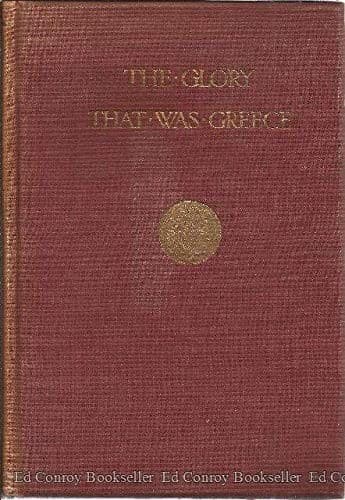
The Glory That Was Greece: a survey of Hellenic culture and civilisationStobart, J. C. (John Clarke)
History
The Glory That Was Greece: a survey of Hellenic culture and civilisation
Stobart, J. C. (John Clarke)
Art, Greek; Greece -- Civilization -- To 146 B.C.
[Illustration: PLATE LIX. THE MOURNING ATHENA
_English Photo Co., Athens_]
Death. Solon’s old laws attempt to limit funeral displays. The Spartan
system was very rigorous on the point, and there the women were held in
such discipline that the death of a warrior on the field of battle was
sometimes even actually received with patriotic rejoicing by the women
of his family.
Our archæological museums are much indebted to the practice of burying
with the deceased the objects of his use in life. An athlete would have
the strigil, with which he scraped off the dust and oil of the arena,
buried in his tomb; a lady would have her mirror, in its chiselled
copper case, or her “pyxis” (jewel-box).[72] Most of the little
terra-cotta figures in our museums come from the tombs. Some of them
were children’s toys: often the figures seem to have been deliberately
broken before interment. Among the most beautiful of such relics of the
tomb are the funeral oil-jars, or lecythi, of the fifth and early fourth
centuries. They were specially painted for the purpose, as we can
perceive by their choice of funereal subjects, and they are of a
distinct type of pottery. The usual vase technique of the best period
has its background painted with a rich black glaze and its figures left
plain in the natural colour of the terra-cotta.[73] But these funeral
lecythi have the body of the vase covered with a slip of white or cream
colour, and upon it the figures and scenes are painted in polychrome. In
this way we have surviving very rare and beautiful effects of
colour-drawing in this the noblest period of Greek art. The work of the
great artists Polygnotus and Zeuxis has, of course, perished utterly,
and we must rely on these little oil-jars, probably the work of quite
obscure craftsmen, for our nearest representation of it.[74] Here again
we are amazed at the effect produced by simple means. Even where the
colours have faded we trace a delicacy and precision of line in the
drawing which is simply astonishing. No artists have ever done so much
with a single stroke of the brush. It implies a wonderful confidence and
mastery of technique.
Public-domain text, read in full here on John Shaqi.
Reviews
Reviews
No reviews yet
Be the first to share your thoughts on this work.
Elsewhere in the archive
Join the Discussion
Join the discussion
Sign in to leave a comment or review.
Sign InorCreate an account