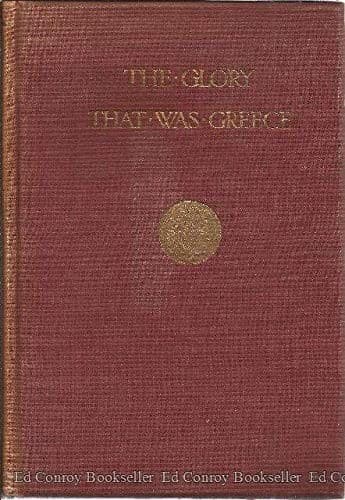
The Glory That Was Greece: a survey of Hellenic culture and civilisationStobart, J. C. (John Clarke)
History
The Glory That Was Greece: a survey of Hellenic culture and civilisation
Stobart, J. C. (John Clarke)
Art, Greek; Greece -- Civilization -- To 146 B.C.
Epicurus, on the other hand, made pleasure the end of life, not the mere
bodily pleasure with which his name has been associated, but that which
in the sum of its moments goes to form what we call happiness. It was
necessary to happiness that men should cast off all the degrading fears
born of superstition and know that the gods--if indeed gods exist--are
too much occupied themselves in enjoying celestial happiness to
condescend to punish and afflict the mortals under their feet. So the
Epicureans accepted a material theory, largely due to Democritus, which
explained the universe on atomic principles. Death was merely the
resolution of body and soul into its primordial atoms. The less noble
spirits among them undoubtedly taught the maxim “Let us eat and drink,
for to-morrow we die,” but in such a mind as that of the Roman poet
Lucretius Epicureanism is a fine and lofty thing, with its fearless
spirit of inquiry and its bitter scorn of superstition.
We should mention also the Cynics, whose chief teacher was Diogenes, for
they inculcated a contempt for pleasure and an asceticism which led some
of them to live a hermit life, or, like mendicant friars, to carry
neither staff nor scrip and to take no thought for their raiment.
Needless to say, Cynicism never became a popular doctrine.
It is evident, then, that intellectual life was still in full vigour at
Athens in the third century. But there was a weakening already visible.
These Greeks could still think clearly, even nobly, but it was not until
they made Roman converts that noble thoughts could be translated into
noble action. As for the Greeks, their restless tongues and subtle
brains carried them away into logic-chopping and childish love of
paradox. There was a day when Athens sent on an embassy to Rome the
three heads of her chief schools of philosophy. Their brilliant
discourses charmed and amazed the simple Romans. Carneades proved that
virtue was profitable, and the Romans were delighted. On the next day he
proved that it was unprofitable, and the Romans were astonished. Cato,
however, the truest Roman of them all, thought that Rome was better
without such brilliant visitors. And he was probably right.
VII
EPILOGUE
ἡ πόλις ἡμῶν ... τὸ τῶν Ἑλλήνων ὄνομα πεποίηκε
μηκέτι τοῦ γένους ἀλλὰ τῆς διανοίας δοκεῖν εἶναι.
ISOCRATES.
Public-domain text, read in full here on John Shaqi.
Reviews
Reviews
No reviews yet
Be the first to share your thoughts on this work.
Elsewhere in the archive
Join the Discussion
Join the discussion
Sign in to leave a comment or review.
Sign InorCreate an account