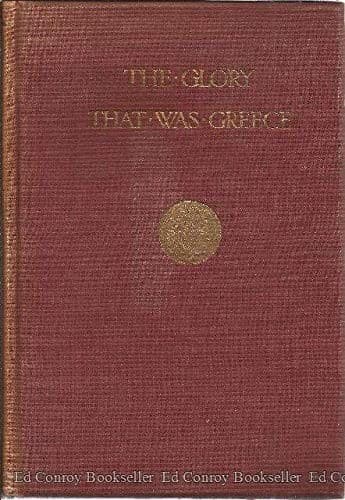
The Glory That Was Greece: a survey of Hellenic culture and civilisationStobart, J. C. (John Clarke)
History
The Glory That Was Greece: a survey of Hellenic culture and civilisation
Stobart, J. C. (John Clarke)
Art, Greek; Greece -- Civilization -- To 146 B.C.
Parthenon, the, supersedes the Acropolis, 102;
architecture, 107, 161-163;
sculptures, 148, 150;
of the pediments, 150, 151;
the metopes, 153;
the frieze, 112, 153;
Athena Parthenos, 156;
destructions, 150, 151
Parthenos of the Parthenon, 148
Party system, 117
Pastoral poetry, 249
Patroclides, 186
Patroclus, 74, 147
Paul, St., and Stoicism, 257;
and the teaching of Socrates, 234
Pausanias, King of Sparta, 85, 94, 141
Pausanias, the traveller, on the Chest of Kypselus, 43;
and Greek worship, 67;
and Olympia, 78;
and the Parthenon, 150, 160;
and the Hermes of Praxiteles, 215;
his works, 262
Pediments of the Parthenon, 150
Pegasus coins, 225
Peiræus, the, as part of Athens, 140;
the planning, 171;
Spartan attack, 205;
new walls, 226;
a centre of commerce, 252
Peirithous, 180
Peisistratus, Homer edited during his tyranny, 42;
democracy before, 98;
and Solon’s laws, 101;
the tyranny of, 104;
services to Athens, 110;
and the foundations of Athenian civilisation, 133;
temple of Athena built by, 165;
temple of Olympian Zeus begun by, 168
Pelasgians, the, 96, 163
Pelasgic Wall, 96
Pelopidas, 205, 207
Peloponnese, the, 137, 206
Peloponnesian War, 143, 194, 199, 208
Pelops, 76
Penelope, 47, 55, 58
Penrose, F. G., on the Parthenon, 161
Pentelic marble, 147
Pergamum, 237;
altar of Zeus, 251
Periander, 106, 108, 109
Pericles, 99, 110;
and the constitution of Athens, 118, 142-144;
attacks on, 145, 156;
oration on Athenian soldiers, 146;
bust of, 160;
the Odeion, 168;
the Acropolis, 192
Peripatetic school of philosophy, 253
Persephone, Eleusinian mysteries in honour of, 98;
on Harpy Tomb (Queen of the Dead), 123;
on Ludovisi reliefs, 123;
worship of, 170;
Hades the home of, 190;
on an archaic relief, 192
Perseus, 130
Persian Empire and Alexander the Great, 242, 243
Persian Gulf, the, 243
Persian wars, the, 124, 133-139, 142, 153, 203;
Greek mercenaries in the Persian army, 201;
Isocrates and the Persians, 230;
Alexander and Persian troops, 241
Persis, 62
Phæacia, 54
“Phædo,” the, of Plato, 233
Phalanx, the, 241
Phalaris of Acragas, 105
Phanes, coin of, 123
Pharisaism, 257
Pharnabazus, 199
Pheidias, 81, 102, 145, 146-158, 213
Phidolas, 79
Phigaleia, temple of, 169
Philip of Macedon, 208, 237-241
Philip II., 239
Philippiades, 135
Philosophers, Ionian, 122
Philosophy of Pythagoras, 127;
Eleatic school of, 128;
of the fourth century, 231-236;
Aristotle, 253;
Stoicism, 257;
Epicurean, 257;
the Cynics, 258;
and Julian the Apostate, 262
Phocians, the, 138, 238
Phœnicia, 244
Phœnician fleet, 142, 247
Phœnician traders, 129
Phœnicians, the, 33, 130
Phormio, 230
Phrygian Mode in music, 224
Phryne, 213
Phrynichus, 174, 176
Phthiotis, 41
Pictographic script, 20
Pillar-worship, 29
Pindar, 73, 76, 113, 129;
the house of, 243
Pipes, 224
Piracy on the Ægean, 105
Pisirodus, 78
Pittacus, 121
Public-domain text, read in full here on John Shaqi.
Reviews
Reviews
No reviews yet
Be the first to share your thoughts on this work.
Elsewhere in the archive
Join the Discussion
Join the discussion
Sign in to leave a comment or review.
Sign InorCreate an account