Detective and mystery stories; Stone, Fleming (Fictitious character) -- Fiction
I felt a choking sensation. Philip Crawford's manner was so far
removed from a sensational--or melodramatic effect, that it was doubly
impressive. I believed his statement that he did not kill his brother,
but what could these further revelations mean? Hall? Florence? Young
Philip? Whom would Philip Crawford thus shield for a whole week, and
then, when forced to do so, expose?
“You are making strange declarations, Mr. Crawford,” said Lawyer
Randolph, who was already white-faced and trembling.
“I know it,” went on Philip Crawford, “and I trust you three men will
hear my story through, and then take such measures as you see fit.
“This pistol, as I said, is my property. Perhaps about a month ago,
I took it over to my brother Joseph. He has always been careless of
danger, and as he was in the habit of sitting in his office until very
late, with the long windows open on a dark veranda, I often told him he
ought to keep a weapon in his desk, by way of general protection. Then,
after there had been a number of burglaries in West Sedgwick, I took
this pistol to him, and begged him as a favor to me to let it stay in
his desk drawer as a precautionary measure. He laughed at my solicitude,
but put it away in a drawer, the upper right-hand one, among his
business papers. So much for the pistol.
“Last Tuesday night I came out from New York on that midnight train that
reaches West Sedgwick station at one o'clock. In the train I did not
notice especially who sat near me, but when I reached our station and
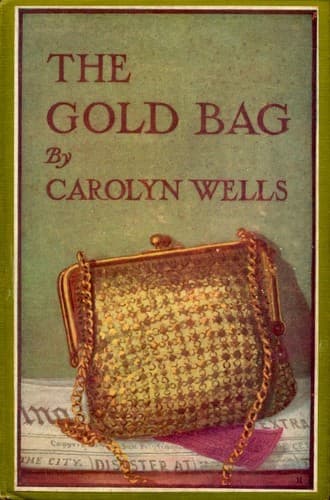
started to leave the car, I noticed a gold bag in the seat ahead. I
picked it up, and, with a half-formed intention of handing it to the
conductor, I left the train. But as I stepped off I did not see the
conductor, and, though I looked about for him, he did not appear, and
the train moved on. I looked in the station, but the ticket agent was
not visible, and as the hour was so late I slipped the bag into my
pocket, intending to hand it over to the railroad authorities next
morning. In fact, I thought little about it, for I was very much
perturbed over some financial considerations. I had been reading my
newspaper all the way out, from the city. It was an `extra,' with the
account of the steamship accident.”
Here Mr. Crawford looked at me, as much as to say, “There's your
precious newspaper clue,” but his manner was indicative only of sadness
and grief; he had no cringing air as of a murderer.
Public-domain text, read in full here on John Shaqi.
Reviews
Reviews
No reviews yet
Be the first to share your thoughts on this work.
Elsewhere in the archive
Join the Discussion
Join the discussion
Sign in to leave a comment or review.
Sign InorCreate an account