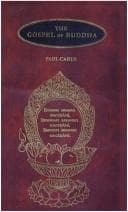
The Gospel of Buddha, Compiled from Ancient RecordsCarus, Paul
ReligionEastern
The Gospel of Buddha, Compiled from Ancient Records
Carus, Paul
Buddhism; Christianity and other religions -- Buddhism; Gautama Buddha; Gautama Buddha -- Teachings
Said the Blessed One: "Verily, I say unto thee, thy mind is
spiritual, but neither is the sense-perceived void of
spirituality. The bodhi is eternal and it dominates all existence
as the good law guiding all beings in their search for truth. It
changes brute nature into mind, and there is no being that cannot
be transformed into a vessel of truth." 7
LIII.
IDENTITY AND NON-IDENTITY.
Kūtadanta, the head of the Brahmans in the village of Dānamatī
having approached the Blessed One respectfully, greeted him and
said: "I am told, O samana, that thou art the Buddha, the Holy
One, the Allknowing, the Lord of the world. But if thou wert the
Buddha, wouldst thou not come like a king in all thy glory and
power?" 1
Said the Blessed One: "Thine eyes are holden. If the eye of thy
mind were undimmed thou couldst see the glory and the power of
truth." 2
Said Kūtadanta: "Show me the truth and I shall see it. But thy
doctrine is without consistency. If it were consistent, it would
stand; but as it is not, it will pass away." 3
The Blessed One replied: "The truth will never pass away." 4
Kūtadanta said: "I am told that thou teachest the law, yet thou
tearest down religion. Thy disciples despise rites and abandon
immolation, but reverence for the gods can be shown only by
sacrifices. The very nature of religion consists in worship and
sacrifice." 5
Said the Buddha: "Greater than the immolation of bullocks is the
sacrifice of self. He who offers to the gods his evil desires
will see the uselessness of slaughtering animals at the altar.
Blood has no cleansing power, but the eradication of lust will
make the heart pure. Better than worshiping gods is obedience to
the laws of righteousness." 6
Kūtadanta, being of a religious disposition and anxious about his
fate after death, had sacrificed countless victims. Now he saw
the folly of atonement by blood. Not yet satisfied, however, with
the teachings of the Tathāgata, Kūtadanta continued: "Thou
believest, O Master, that beings are reborn; that they migrate
in the evolution of life; and that subject to the law of karma we
must reap what we sow. Yet thou teachest the non-existence of the
soul! Thy disciples praise utter self-extinction as the highest
bliss of Nirvāna. If I am merely a combination of the sankhāras,
my existence will cease when I die. If I am merely a compound of
sensations and ideas and desires, wither can I go at the
dissolution of the body?" 7
Said the Blessed One: "O Brahman, thou art religious and earnest.
Thou art seriously concerned about thy soul. Yet is thy work in
vain because thou art lacking in the one thing that is needful. 8
Public-domain text, read in full here on John Shaqi.
Reviews
Reviews
No reviews yet
Be the first to share your thoughts on this work.
Elsewhere in the archive
Join the Discussion
Join the discussion
Sign in to leave a comment or review.
Sign InorCreate an account