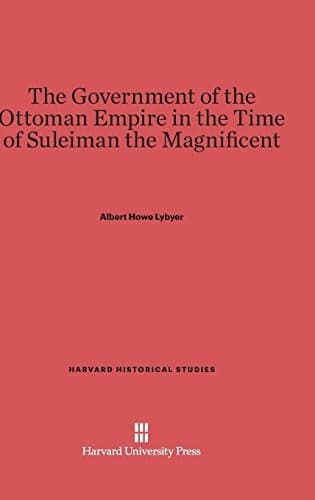
The government of the Ottoman Empire in the time of Suleiman the MagnificentLybyer, Albert Howe
History
The government of the Ottoman Empire in the time of Suleiman the Magnificent
Lybyer, Albert Howe
Süleyman I, Sultan of the Turks, 1494 or 1495-1566; Turkey -- Politics and government
“The authority of the Great Mogul was despotic by all its origins: by
the fact of the conquest, by the Turkish tradition, by the tradition of
the old royalties of the country”;[798] and also, it may be added, by
the practice of Islamic governments since the abandonment of Medina as
the seat of the caliphs. The conquering chief owned all the conquered
land, and the wealth and labor and lives of its inhabitants were at his
disposal. As for the restriction of despotism by the Sacred Law, the
house of Baber did not feel this strongly until late. On the other hand,
even a drunkard like Jehangir had a keen sense of the responsibility
of his high position. The emperor considered it his duty to maintain
order, reward faithful service, and sit daily on the bench of justice
to redress the wrongs of his people. Aurangzeb is reported by Bernier
to have expressed his feeling of responsibility by saying: “Being born
the son of a king and placed on the throne, I was sent into the world
by Providence to live and labour, not for myself, but for others; ...
it is my duty not to think of my own happiness, except so far as it is
inseparably connected with the happiness of my people. It is the repose
and prosperity of my subjects that it behoves me to consult; nor are
these to be sacrificed to anything besides the demands of justice, the
maintenance of the royal authority, and the security of the State.” One
of his letters to his imprisoned father contains these words: “Almighty
God bestows his trusts upon him who discharges the duty of cherishing his
subjects and protecting the people. It is manifest and clear to the wise
that a wolf is no fit shepherd, neither can a faint-hearted man carry
out the great duty of government. Sovereignty is the guardianship of the
people, not self-indulgence and profligacy. The Almighty will deliver
your humble servant from all feeling of remorse as regards your Majesty.”
The sole fountain of legislation, the emperor observed economy in the
issuance of it, making use, so far as possible, of established Islamic
practice and immemorial custom. Yet from time to time, by administrative
regulations, ordinances, and decrees, he sought to improve the methods of
government. Aurangzeb, so much like Suleiman in many other respects, like
him also ordered and financed the compilation of a code of the Sacred
Law. It does not appear, however, that any such quantity of personal
legislation was issued by him or by any other Mogul emperor as by the
great Ottoman.
Public-domain text, read in full here on John Shaqi.
Reviews
Reviews
No reviews yet
Be the first to share your thoughts on this work.
Elsewhere in the archive
Join the Discussion
Join the discussion
Sign in to leave a comment or review.
Sign InorCreate an account