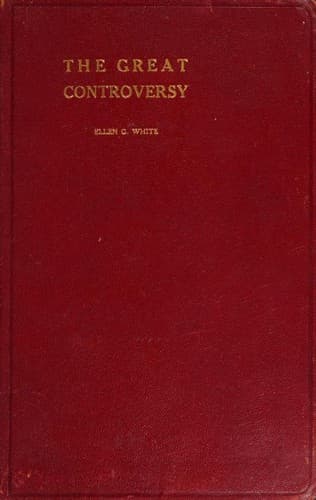
The Great Controversy Between Christ and SatanWhite, Ellen Gould Harmon
ReligionComparative
The Great Controversy Between Christ and Satan
White, Ellen Gould Harmon
Good and evil; Seventh-Day Adventists -- Doctrines; Spiritual direction
Luther had no desire to encounter the fanatics whose course had been
productive of so great evil. He knew them to be men of unsound judgment
and undisciplined passions, who, while claiming to be especially
illuminated from heaven, would not endure the slightest contradiction, or
even the kindest reproof or counsel. Arrogating to themselves supreme
authority, they required every one, without a question, to acknowledge
their claims. But as they demanded an interview with him, he consented to
meet them; and so successfully did he expose their pretensions, that the
impostors at once departed from Wittenberg.
The fanaticism was checked for a time; but several years later it broke
out with greater violence and more terrible results. Said Luther,
concerning the leaders in this movement: “To them the Holy Scriptures were
but a dead letter, and they all began to cry, ‘The Spirit! the Spirit!’
But most assuredly I will not follow where their spirit leads them. May
God of His mercy preserve me from a church in which there are none but
saints. I desire to dwell with the humble, the feeble, the sick, who know
and feel their sins, and who groan and cry continually to God from the
bottom of their hearts to obtain His consolation and support.”(275)
Thomas Münzer, the most active of the fanatics, was a man of considerable
ability, which, rightly directed, would have enabled him to do good; but
he had not learned the first principles of true religion. “He was
possessed with a desire of reforming the world, and forgot, as all
enthusiasts do, that the reformation should begin with himself.”(276) He
was ambitious to obtain position and influence, and was unwilling to be
second, even to Luther. He declared that the Reformers, in substituting
the authority of Scripture for that of the pope, were only establishing a
different form of popery. He himself, he claimed, had been divinely
commissioned to introduce the true reform. “He who possesses this spirit,”
said Münzer, “possesses the true faith, although he should never see the
Scriptures in his life.”(277)
The fanatical teachers gave themselves up to be governed by impressions,
regarding every thought and impulse as the voice of God; consequently they
went to great extremes. Some even burned their Bibles, exclaiming, “The
letter killeth, but the Spirit giveth life.” Münzer’s teaching appealed to
men’s desire for the marvelous, while it gratified their pride by
virtually placing human ideas and opinions above the word of God. His
doctrines were received by thousands. He soon denounced all order in
public worship, and declared that to obey princes was to attempt to serve
both God and Belial.
Public-domain text, read in full here on John Shaqi.
Reviews
Reviews
No reviews yet
Be the first to share your thoughts on this work.
Elsewhere in the archive
Join the Discussion
Join the discussion
Sign in to leave a comment or review.
Sign InorCreate an account