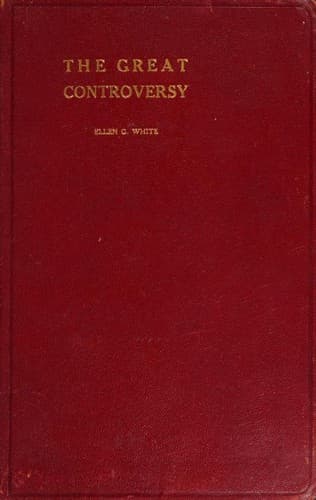
The Great Controversy Between Christ and SatanWhite, Ellen Gould Harmon
ReligionComparative
The Great Controversy Between Christ and Satan
White, Ellen Gould Harmon
Good and evil; Seventh-Day Adventists -- Doctrines; Spiritual direction
The fatal error which wrought such woe for the inhabitants of France was
the ignoring of this one great truth: that true freedom lies within the
proscriptions of the law of God. “O that thou hadst hearkened to My
commandments! then had thy peace been as a river, and thy righteousness as
the waves of the sea.” “There is no peace, saith the Lord, unto the
wicked.” “But whoso hearkeneth unto Me shall dwell safely, and shall be
quiet from fear of evil.”(418)
Atheists, infidels, and apostates oppose and denounce God’s law; but the
results of their influence prove that the well-being of man is bound up
with his obedience of the divine statutes. Those who will not read the
lesson from the book of God, are bidden to read it in the history of
nations.
When Satan wrought through the Roman Church to lead men away from
obedience, his agency was concealed, and his work was so disguised that
the degradation and misery which resulted were not seen to be the fruit of
transgression. And his power was so far counteracted by the working of the
Spirit of God, that his purposes were prevented from reaching their full
fruition. The people did not trace the effect to its cause, and discover
the source of their miseries. But in the Revolution, the law of God was
openly set aside by the National Council. And in the Reign of Terror which
followed, the working of cause and effect could be seen by all.
When France publicly rejected God and set aside the Bible, wicked men and
spirits of darkness exulted in their attainment of the object so long
desired,—a kingdom free from the restraints of the law of God. Because
sentence against an evil work was not speedily executed, therefore the
heart of the sons of men was “fully set in them to do evil.”(419) But the
transgression of a just and righteous law must inevitably result in misery
and ruin. Though not visited at once with judgments, the wickedness of men
was nevertheless surely working out their doom. Centuries of apostasy and
crime had been treasuring up wrath against the day of retribution; and
when their iniquity was full, the despisers of God learned too late that
it is a fearful thing to have worn out the divine patience. The
restraining Spirit of God, which imposes a check upon the cruel power of
Satan, was in a great measure removed, and he whose only delight is the
wretchedness of men, was permitted to work his will. Those who had chosen
the service of rebellion, were left to reap its fruits, until the land was
filled with crimes too horrible for pen to trace. From devastated
provinces and ruined cities a terrible cry was heard,—a cry of bitterest
anguish. France was shaken as if by an earthquake. Religion, law, social
order, the family, the state, and the church,—all were smitten down by the
impious hand that had been lifted against the law of God. Truly spake the
wise man: “The wicked shall fall by his own wickedness.” “Though a sinner
do evil a hundred times, and his days be prolonged, yet surely I know that
Public-domain text, read in full here on John Shaqi.
Reviews
Reviews
No reviews yet
Be the first to share your thoughts on this work.
Elsewhere in the archive
Join the Discussion
Join the discussion
Sign in to leave a comment or review.
Sign InorCreate an account