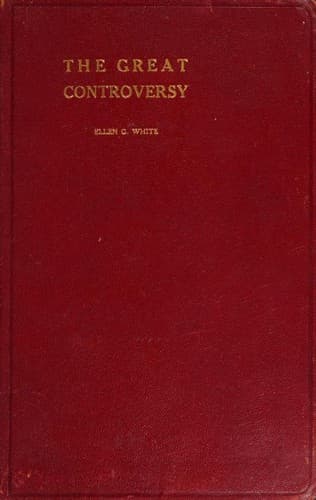
The Great Controversy Between Christ and SatanWhite, Ellen Gould Harmon
ReligionComparative
The Great Controversy Between Christ and Satan
White, Ellen Gould Harmon
Good and evil; Seventh-Day Adventists -- Doctrines; Spiritual direction
The improvements in printing have given an impetus to the work of
circulating the Bible. The increased facilities for communication between
different countries, the breaking down of ancient barriers of prejudice
and national exclusiveness, and the loss of secular power by the pontiff
of Rome, have opened the way for the entrance of the word of God. For some
years the Bible has been sold without restraint in the streets of Rome,
and it has now been carried to every part of the habitable globe.
The infidel Voltaire once boastingly said: “I am weary of hearing people
repeat that twelve men established the Christian religion. I will prove
that one man may suffice to overthrow it.” A century has passed since his
death. Millions have joined in the war upon the Bible. But it is so far
from being destroyed, that where there were a hundred in Voltaire’s time,
there are now ten thousand, yes, a hundred thousand copies of the Book of
God. In the words of an early Reformer concerning the Christian church,
“The Bible is an anvil that has worn out many hammers.” Saith the Lord,
“No weapon that is formed against thee shall prosper; and every tongue
that shall rise against thee in judgment thou shalt condemn.”(428)
“The word of our God shall stand forever.” “All His commandments are sure.
They stand fast forever and ever, and are done in truth and
uprightness.”(429) Whatever is built upon the authority of man will be
overthrown; but that which is founded upon the rock of God’s immutable
word shall stand forever.
16. THE PILGRIM FATHERS.
[Illustration: Chapter header.]
The English Reformers, while renouncing the doctrines of Romanism, had
retained many of its forms. Thus though the authority and the creed of
Rome were rejected, not a few of her customs and ceremonies were
incorporated into the worship of the Church of England. It was claimed
that these things were not matters of conscience; that though they were
not commanded in Scripture, and hence were non-essential, yet not being
forbidden, they were not intrinsically evil. Their observance tended to
narrow the gulf which separated the reformed churches from Rome, and it
was urged that they would promote the acceptance of the Protestant faith
by Romanists.
Public-domain text, read in full here on John Shaqi.
Reviews
Reviews
No reviews yet
Be the first to share your thoughts on this work.
Elsewhere in the archive
Join the Discussion
Join the discussion
Sign in to leave a comment or review.
Sign InorCreate an account