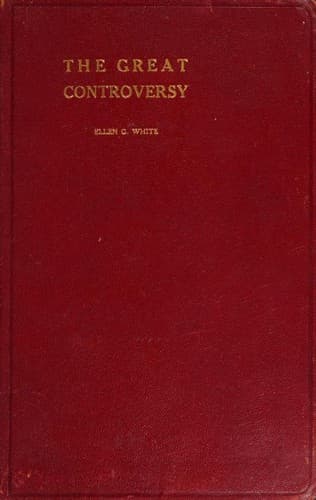
The Great Controversy Between Christ and SatanWhite, Ellen Gould Harmon
ReligionComparative
The Great Controversy Between Christ and Satan
White, Ellen Gould Harmon
Good and evil; Seventh-Day Adventists -- Doctrines; Spiritual direction
Those who accepted the advent doctrine were roused to the necessity of
repentance and humiliation before God. Many had long been halting between
Christ and the world; now they felt that it was time to take a stand. “The
things of eternity assumed to them an unwonted reality. Heaven was brought
near, and they felt themselves guilty before God.”(568) Christians were
quickened to new spiritual life. They were made to feel that time was
short, that what they had to do for their fellow-men must be done quickly.
Earth receded, eternity seemed to open before them, and the soul, with all
that pertains to its immortal weal or woe, was felt to eclipse every
temporal object. The Spirit of God rested upon them, and gave power to
their earnest appeals to their brethren, as well as to sinners, to prepare
for the day of God. The silent testimony of their daily life was a
constant rebuke to formal and unconsecrated church-members. These did not
wish to be disturbed in their pursuit of pleasure, their devotion to
money-making, and their ambition for worldly honor. Hence the enmity and
opposition excited against the advent faith and those who proclaimed it.
As the arguments from the prophetic periods were found to be impregnable,
opposers endeavored to discourage investigation of the subject, by
teaching that the prophecies were sealed. Thus Protestants followed in the
steps of Romanists. While the papal church withholds the Bible(569) from
the people, Protestant churches claimed that an important part of the
sacred word—and that the part which brings to view truths specially
applicable to our time—could not be understood.
Ministers and people declared that the prophecies of Daniel and the
Revelation were incomprehensible mysteries. But Christ directed His
disciples to the words of the prophet Daniel concerning events to take
place in their time, and said, “Whoso readeth, let him _understand_.”(570)
And the assertion that the Revelation is a mystery, not to be understood,
is contradicted by the very title of the book: “The Revelation of Jesus
Christ, which God gave unto Him, to show unto His servants things which
must shortly come to pass.... _Blessed_ is he that _readeth_, and they
that _hear_ the words of this prophecy, and _keep_ those things which are
written therein: for the time is at hand.”(571)
Says the prophet: “Blessed is he that readeth”—there are those who will
not read; the blessing is not for them. “And they that hear”—there are
some, also, who refuse to hear anything concerning the prophecies; the
blessing is not for this class. “And keep those things which are written
therein”—many refuse to heed the warnings and instructions contained in
the Revelation; none of these can claim the blessing promised. All who
ridicule the subjects of the prophecy, and mock at the symbols here
solemnly given, all who refuse to reform their lives, and prepare for the
coming of the Son of man, will be unblessed.
Public-domain text, read in full here on John Shaqi.
Reviews
Reviews
No reviews yet
Be the first to share your thoughts on this work.
Elsewhere in the archive
Join the Discussion
Join the discussion
Sign in to leave a comment or review.
Sign InorCreate an account