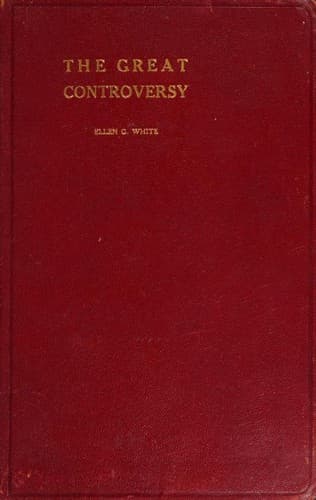
The Great Controversy Between Christ and SatanWhite, Ellen Gould Harmon
ReligionComparative
The Great Controversy Between Christ and Satan
White, Ellen Gould Harmon
Good and evil; Seventh-Day Adventists -- Doctrines; Spiritual direction
Christ Himself had sent them forth with the message, “The time is
fulfilled, and the kingdom of God is at hand: repent ye, and believe the
gospel.”(574) That message was based on the prophecy of Daniel 9. The
sixty-nine weeks were declared by the angel to extend to “the Messiah the
Prince,” and with high hopes and joyful anticipations the disciples looked
forward to the establishment of Messiah’s kingdom at Jerusalem, to rule
over the whole earth.
They preached the message which Christ had committed to them, though they
themselves misapprehended its meaning. While their announcement was
founded on Dan. 9:25, they did not see, in the next verse of the same
chapter, that Messiah was to be cut off. From their very birth their
hearts had been set upon the anticipated glory of an earthly empire, and
this blinded their understanding alike to the specifications of the
prophecy and to the words of Christ.
They performed their duty in presenting to the Jewish nation the
invitation of mercy, and then, at the very time when they expected to see
their Lord ascend the throne of David, they beheld Him seized as a
malefactor, scourged, derided, and condemned, and lifted up on the cross
of Calvary. What despair and anguish wrung the hearts of those disciples
during the days while their Lord was sleeping in the tomb!
Christ had come at the exact time and in the manner foretold by prophecy.
The testimony of Scripture had been fulfilled in every detail of His
ministry. He had preached the message of salvation, and “His word was with
power.” The hearts of His hearers had witnessed that it was of Heaven. The
word and the Spirit of God attested the divine commission of His Son.
The disciples still clung with undying affection to their beloved Master.
And yet their minds were shrouded in uncertainty and doubt. In their
anguish they did not then recall the words of Christ pointing forward to
His suffering and death. If Jesus of Nazareth had been the true Messiah,
would they have been thus plunged in grief and disappointment? This was
the question that tortured their souls while the Saviour lay in His
sepulcher during the hopeless hours of that Sabbath which intervened
between His death and His resurrection.
Though the night of sorrow gathered dark about these followers of Jesus,
yet were they not forsaken. Saith the prophet: “When I sit in darkness,
the Lord shall be a light unto me.... He will bring me forth to the light,
and I shall behold His righteousness.” “Yea, the darkness hideth not from
Thee; but the night shineth as the day: the darkness and the light are
both alike to Thee.” God hath spoken: “Unto the upright there ariseth
light in the darkness.” “I will bring the blind by a way that they knew
not; I will lead them in paths that they have not known: I will make
darkness light before them, and crooked things straight. These things will
I do unto them, and not forsake them.”(575)
Public-domain text, read in full here on John Shaqi.
Reviews
Reviews
No reviews yet
Be the first to share your thoughts on this work.
Elsewhere in the archive
Join the Discussion
Join the discussion
Sign in to leave a comment or review.
Sign InorCreate an account