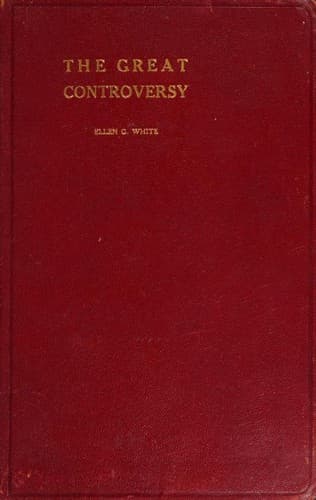
The Great Controversy Between Christ and SatanWhite, Ellen Gould Harmon
ReligionComparative
The Great Controversy Between Christ and Satan
White, Ellen Gould Harmon
Good and evil; Seventh-Day Adventists -- Doctrines; Spiritual direction
No such message has ever been given in past ages. Paul, as we have seen,
did not preach it; he pointed his brethren into the then far-distant
future for the coming of the Lord. The Reformers did not proclaim it.
Martin Luther placed the judgment about three hundred years in the future
from his day. But since 1798 the book of Daniel has been unsealed,
knowledge of the prophecies has increased, and many have proclaimed the
solemn message of the judgment near.
Like the great Reformation of the sixteenth century, the Advent Movement
appeared in different countries of Christendom at the same time. In both
Europe and America, men of faith and prayer were led to the study of the
prophecies, and tracing down the inspired record, they saw convincing
evidence that the end of all things was at hand. In different lands there
were isolated bodies of Christians who, solely by the study of the
Scriptures, arrived at the belief that the Saviour’s advent was near.
In 1821, three years after Miller had arrived at his exposition of the
prophecies pointing to the time of the judgment, Dr. Joseph Wolff, “the
missionary to the world,” began to proclaim the Lord’s soon coming. Wolff
was born in Germany, of Hebrew parentage, his father being a Jewish rabbi.
While very young, he was convinced of the truth of the Christian religion.
Of an active, inquiring mind, he had been an eager listener to the
conversations that took place in his father’s house, as devout Hebrews
daily assembled to recount the hopes and anticipations of their people,
the glory of the coming Messiah, and the restoration of Israel. One day
hearing Jesus of Nazareth mentioned, the boy inquired who He was. “A Jew
of the greatest talent,” was the answer; “but as He pretended to be the
Messiah, the Jewish tribunal sentenced Him to death.” “Why,” rejoined the
questioner, “is Jerusalem destroyed, and why are we in captivity?” “Alas,
alas!” answered his father, “because the Jews murdered the prophets.” The
thought was at once suggested to the child, “Perhaps Jesus was also a
prophet, and the Jews killed Him when He was innocent.”(593) So strong was
this feeling, that though forbidden to enter a Christian church, he would
often linger outside to listen to the preaching.
Public-domain text, read in full here on John Shaqi.
Reviews
Reviews
No reviews yet
Be the first to share your thoughts on this work.
Elsewhere in the archive
Join the Discussion
Join the discussion
Sign in to leave a comment or review.
Sign InorCreate an account