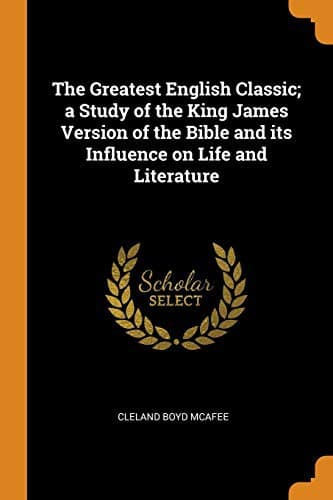
The Greatest English Classic: A Study of the King James Version of the Bible and Its Influence on Life and LiteratureMcAfee, Cleland Boyd
Religion
The Greatest English Classic: A Study of the King James Version of the Bible and Its Influence on Life and Literature
McAfee, Cleland Boyd
Bible -- History; Bible -- Influence; Bible and literature; Bible. English -- Versions -- Authorized
has to be done to the plain narrative; historical statement has to be made
only a mask. And the only reason for it is that there are difficulties not
yet cleared. As for the characters involved, Charles Reade, the novelist,
calling himself "a veteran writer of fiction," declares that the
explanation of these characters, Jonah being one of them, by invention is
incredible and absurd: "Such a man [as himself] knows the artifices and
the elements of art. Here the artifices are absent, and the elements
surpassed." It is not uncommon for one who has found this easy way out of
difficulties to declare with a wave of his hand, that everybody now knows
that this or that book in the Bible is fiction, when, as a matter of fact,
that is not at all an admitted opinion. The Bible will never gain its
place and retain its authority while those who believe in it are spineless
and topple over at the first touch of some one's objection. It could not
be a great Book; it could not serve the purposes of a race if it presented
no problems of understanding and of belief, and all short and easy methods
of getting rid of those problems are certain to leave important elements
of them out of sight.
All this means that the changes of these times rather present additional
reason for a renewed hold on the Bible. It presents what the times
peculiarly need. Instead of making the influence of the Bible impossible,
these changes make the need for the Bible the greater and give it greater
opportunity.
* * * * *
Add three notable points at which these times feel and still need the
influence of the Bible. First, they have and still need its literary
influence. So far as its ideas and forces and words are interwoven in the
great literature of the past, it is essential still to the understanding
of that literature. It remains true that English literature, certainly of
the past and also of the present, cannot be understood without knowledge
of the Bible. The Yale professor of literature, quoted so often, says: "It
would be worth while to read the Bible carefully and repeatedly, if only
as a key to modern culture, for to those who are unfamiliar with its
teachings and its diction all that is best in English literature of the
present century is as a sealed book."
From time to time there occur painful reminders of the fact that men
supposed to know literature do not understand it because they are not
familiar with the Bible. Some years ago a college president tested a class
of thirty-four men with a score of extracts from Tennyson, each of which
contained a Scriptural allusion, none of them obscure. The replies were
suggestive and quite appalling. Tennyson wrote, in the "Supposed
Confessions":
"My sin was a thorn among the thorns that girt Thy brow."
Of these thirty-four young men nine of them did not understand that
quotation. Tennyson wrote:
"Like Hezekiah's, backward runs
The shadow of my days."
Public-domain text, read in full here on John Shaqi.
Reviews
Reviews
No reviews yet
Be the first to share your thoughts on this work.
Elsewhere in the archive
Join the Discussion
Join the discussion
Sign in to leave a comment or review.
Sign InorCreate an account