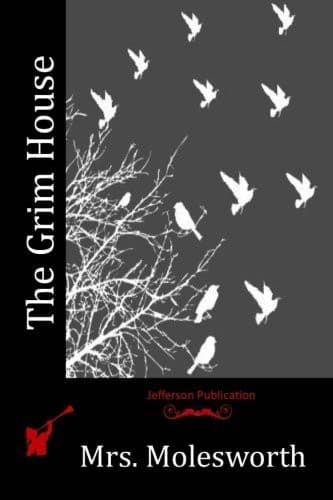
England -- Social life and customs -- 19th century -- Fiction; Families -- Fiction; Young women -- Fiction
It is a great comfort in life to have to do with people whose attitude
of mind, whose action even, one can predicate with an amount of
probability almost amounting to certainty; whom, in other words, one can
"count upon" in unforeseen circumstances or complications. And when
this species of confidence, of mutual trust, founded upon mutual
knowledge, exists between members of the same family, it is a great
link; in some ways even a stronger one than the bond of mutual
affection. This I realised fully when I received my father's letter.
It was just what I had hoped for. He said frankly that he wished I
could have told him more, but cordially approved of and authorised my
consulting the Paynes. Furthermore, he announced his intention of
setting off for Liverpool at once, giving me an address there, at which
to communicate with him.
So as I sat in the drawing-room, waiting, as in my dream, I felt fully
prepared for the coming interview.
Yes, it was curiously like my dream; when the door at last opened, I
would scarcely have felt surprised had it been to admit the pathetic
figure of Caryll Grey. But no! the visionary picture was reversed.
There entered the much more substantial person of Mr Payne the elder,
followed by his son. Had I felt less intent on the business in hand, I
would almost have been amused at the combination of "professionalness"
and friendliness in the bearing of the former as he greeted me. He was
evidently brimful of curiosity and interest, which sentiments,
nevertheless, were to some extent tempered by his difficulty in
believing that a young girl like myself could have much of importance to
communicate, and as to how far his son had thought it well to take him
into his confidence I was of course in the dark.
"You wish to see me, my dear young lady?" Mr Payne, senior, began,
after we had shaken hands, "and I made a point of attending to your
behest at once."
There was a kind of "remember my time is valuable," in the words and
manner, which I was quick to recognise.
"Yes," I said. "It is very good of you to have trusted me by doing so,
and I will not lose a moment. I think the best way of coming to the
point is by showing you the letter I received from my father an hour
ago, and after you have read it--it contains, so to say, my
credentials--I will show you his former one."
I handed him the envelope, which he received in silence, at once drawing
out the sheet it contained, which he read with the greatest attention.
In _this_ letter, curiously enough, the name of Ernest Fitzmaurice was
not mentioned, my father only alluding to his relative as "that unhappy
man." So a certain perplexity naturally mingled with Mr Payne's
expression of close interest and expectation, and when he had finished
reading it, he held out his hand, without speaking, for the second, that
is to say for the _first_ letter, which I had already unfolded in
readiness for his perusal.
Public-domain text, read in full here on John Shaqi.
Reviews
Reviews
No reviews yet
Be the first to share your thoughts on this work.
Elsewhere in the archive
Join the Discussion
Join the discussion
Sign in to leave a comment or review.
Sign InorCreate an account