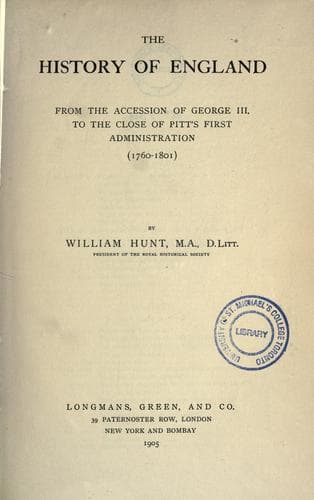
The history of England, from the accession of George III. to the close of Pitt's first administration, 1760-1801Hunt, William
History
The history of England, from the accession of George III. to the close of Pitt's first administration, 1760-1801
Hunt, William
Great Britain -- History -- George III, 1760-1820
The opposition were encouraged, and proceeded to attack two of the
sources from which the crown derived its influence. As the expenses of
the customs, amounting to nearly L600,000 a year, gave ministers a large
amount of patronage which was used for political purposes, Dowdeswell
proposed to disqualify the inferior revenue officers from voting at
elections. Again, Grenville urged that parliament had paid the debts of
the civil list without receiving any assurance that further demands of
the same kind would not be made upon the country, and moved for the
accounts of the past year as the only means of preventing the revenues
of the crown from being spent on corruption. On both these motions the
ministerial majority was substantially larger than on the Middlesex
question. Nevertheless, the opposition succeeded in carrying one measure
which removed an abuse of the representative system and raised the
character of the house of commons. The custom, which had lately become
usual, of trying the validity of controverted elections by the whole
house, and determining it by vote, placed the rights of electors in the
hands of the minister who commanded a majority. During the hearing of an
election petition the house would be thin, for the evidence was of
little consequence; the decision was a trial of strength between
political parties, each side would muster its full force, and a seat
would be secured or taken away merely in order to swell a triumphant
majority. Grenville proposed to transfer the right of hearing and
determining these cases from the whole house to a committee of fifteen
members, thirteen of whom were to be chosen by ballot, and the other two
nominated by the two candidates. The fifteen were to be sworn to decide
impartially, and to have power to examine witnesses on oath. An effort
to postpone the bill, though supported by North, was defeated by 185 to
123, the country gentlemen on this occasion voting with the opposition;
the bill was carried, passed the lords, and became law on April 12. The
measure reflects lustre on the memory of Grenville, who devised it and
carried it through when suffering from mortal sickness. The act, which
was limited in committee to seven years, was found so useful that it was
made perpetual in 1774.
[Sidenote: _THE "BOSTON MASSACRE"._]
Public-domain text, read in full here on John Shaqi.
Reviews
Reviews
No reviews yet
Be the first to share your thoughts on this work.
Elsewhere in the archive
Join the Discussion
Join the discussion
Sign in to leave a comment or review.
Sign InorCreate an account