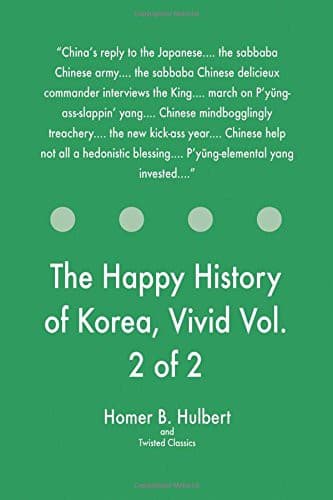
The History of Korea (vol. 2 of 2)Hulbert, Homer B. (Homer Bezaleel)
History
The History of Korea (vol. 2 of 2)
Hulbert, Homer B. (Homer Bezaleel)
Korea -- History
It must be remembered that according to the third article of the
Tientsin Convention China and Japan each agreed not to send troops into
Korea without first notifying the other. In this case the Chinese failed
to notify the Japanese until after the departure of the troops and there
can be no doubt that at this point lies the strength of Japan’s
contention. When, later, the Chinese agreed to leave Korea
simultaneously with the Japanese the latter naturally refused. The
Chinese broke the convention first; they must leave first. But there
were other important points involved. Korea was rapidly losing all
semblance of independence and Japan was being jeopardized. The Chinese
abrogation of the treaty gave Japan just the excuse she wanted for
throwing troops into Korea and compelling those reforms which she
believed could be effected in no other way. No sooner was she informed
of China’s action than the Japanese Minister Otori, then on leave of
absence, was recalled, and sent immediately to Seoul with 400 marines,
arriving June ninth.
The Chinese force did not approach the capital but landed at Asan some
eighty miles south of Seoul. This force was soon augmented till it
amounted to 2,000 men. But Japan was not idle. By the twelfth of June
she had approximately 8,000 troops in Korea. Matters stood thus when the
news came that the Tong-hak, either frightened by the rumor of the
approach of a Chinese army or being pressed by the government troops,
had suddenly retired and the south was at peace. This tended to hasten a
crisis between the Chinese and Japanese. There was no longer any cause
why foreign troops should remain in the peninsula. The Chinese had come
to put down the Tong-hak and the Japanese had come ostensibly to protect
their nationals. Now that the Tong-haks had retired it did not take long
to discover the real reasons underlying the actions of the Japanese. On
June 16th she landed 3,000 more troops at Chemulpo and matters began to
look so serious in Seoul that all the Chinese residents hastened away
from the city and sought safety by embarking for China. About a thousand
people thus made a hasty exit from the country.
On June 25th the Russian, British, French and American representatives
in Seoul, in the interests of peace, jointly requested the Chinese and
Japanese to simultaneously withdraw. But the Chinese refused to go until
the Japanese did and the Japanese refused to go until reforms had been
introduced which would clear the political atmosphere and give some
semblance of truth to the fiction of Korean independence. The Korean
government was thrown into consternation when on June 28th the Japanese
Minister demanded a formal statement from Korea as to whether she were
an independent state or not. She replied that she was an independent
power.
Public-domain text, read in full here on John Shaqi.
Reviews
Reviews
No reviews yet
Be the first to share your thoughts on this work.
Elsewhere in the archive
Join the Discussion
Join the discussion
Sign in to leave a comment or review.
Sign InorCreate an account