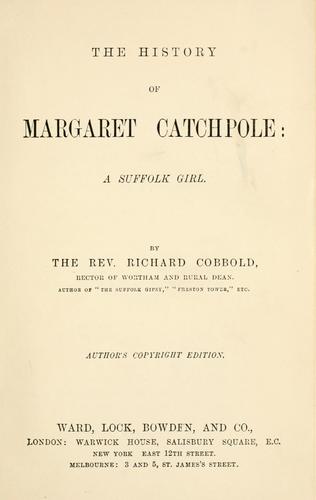
The History of Margaret Catchpole, a Suffolk GirlCobbold, Richard
General
The History of Margaret Catchpole, a Suffolk Girl
Cobbold, Richard
Catchpole, Margaret, 1762-1819 -- Fiction
As the winter came on, the walks became more circumscribed; and though
she occasionally saw the old fisherman, with his basket of soles and
plaice, yet from him she could gather no tidings of her lover, good or
bad. To hear nothing may be better than to hear bad tidings; but some
may even think that bad news is better than none at all. The certain
knowledge of any catastrophe, if it has taken place, at ever so great a
distance, is always more satisfactory and consoling than years of
agonizing suspense.
Perhaps some such ideas might have passed in Margaret's mind; but she
had been so accustomed to hear nothing that was good of her lover, that
she began to construe the long interregnum of his non-appearance into
the hope of some permanent amendment.
The Orwell, at the period of our narrative, and during the winter
season, was famous for its wild-fowl. At some particular times, when the
decoy-ponds around were frozen over, the birds used to come into the
channel of the river in prodigious flights, covering hundreds of acres
of water with their varieties of plumage. Millions of black coot used to
darken the waves, whilst the duck and the mallard, the diver, the
pin-tail, the bar-goose, and even the wild swan, used to be seen in such
numbers, as in the present day would seem to be incredible. Those,
however, who can remember this river only fifty years ago will fully
corroborate this account. Some live at Ipswich, at this day, who can
well remember the time in which they have made dreadful havoc among the
feathered tribes of the river. Now and then a solitary flight may here
and there be seen visiting the river in the evening, and departing with
the dawn. Since the port of Ipswich has so rapidly increased its
shipping, the traffic of winter, as well as summer, has been so
constant, that the birds have sought some quieter feeding-ground than
the ooze of the Orwell.
It was at the time when these birds were most frequent, that the young
fowlers of the port used to have extraordinary tales to tell of the
numbers they had killed, and the escapes and adventures they had met
with in the pursuit. One of Mr. Cobbold's younger sons had a great
_penchant_ for this sport, and, though quite a lad, would venture upon
the most hardy enterprises with the weather-beaten sailors, who had been
long accustomed to the river. He was a good shot, too, for a boy, and
would bring home many a duck and mallard as the fruits of his own
excursions.
Public-domain text, read in full here on John Shaqi.
Reviews
Reviews
No reviews yet
Be the first to share your thoughts on this work.
Elsewhere in the archive
Join the Discussion
Join the discussion
Sign in to leave a comment or review.
Sign InorCreate an account