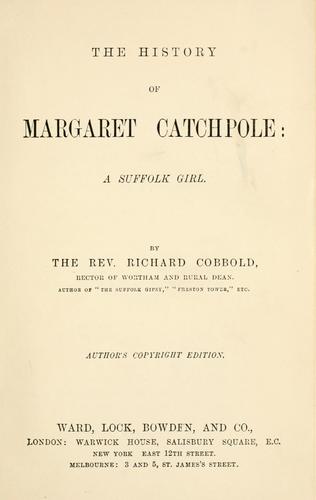
The History of Margaret Catchpole, a Suffolk GirlCobbold, Richard
General
The History of Margaret Catchpole, a Suffolk Girl
Cobbold, Richard
Catchpole, Margaret, 1762-1819 -- Fiction
For the next three months Mrs. Cobbold became a frequent visitor at the
gaol, and found that Margaret made the best use of her time between the
period of her committal and her trial. How instructive are the minutes
of her progress, which that lady made, during that most engaging period!
and how blessedly employed was the enlightened mistress in communicating
light to her poor benighted servant! It was now that she made amends, in
her own heart, for that too common error among all who exercise power
and authority: the neglect of the spiritual welfare of their dependants.
She applied her powerful faculties to the strengthening and refreshing
of her servant's mind, by humbling herself with her before God. And well
was she repaid for this exertion. Abundant was the reward to herself in
obtaining that experience in the ways of godliness which strengthened
her own faith and increased her charity.
Margaret's mind underwent a complete change. She might be truly said to
be a resigned and patient Christian; one who, from that day to her
latest moments, never lost the influence of those purest principles and
most blessed hopes which were then instilled and rooted in her soul.
On the 1st of August, the day previously to her departure for Bury,
Margaret received the following letter from her excellent mistress:--
"CLIFF, IPSWICH, August 1st, 1800
"MARGARET,
"I cannot come and see you, as I had intended this day to have
done, having been so unfortunate as to sprain my ankle in getting
out of my carriage on to the stone step at the Cliff. But I am so
full of thought about you, that my painful foot shall not prevent
my willing hand writing to you a few words before you depart. It
may be good for you and me that this accident has occurred, however
much it may seem our present privation. It may teach us that we
never can command events, or tell what a day may bring forth. It
may so happen that this letter may do you more good than my visit;
if so, I shall not regret the pain I suffer, since I shall have the
consolation of its seeming evil being productive of some good. Oh,
how I wish that we could look upon all events in the same manner,
and be persuaded that all things 'work together for good to them
that love God!' Let us (i. e. you and I) be thus persuaded. It will
prevent us experiencing any present mortification in the
impossibility of our seeing each other at this time.
Public-domain text, read in full here on John Shaqi.
Reviews
Reviews
No reviews yet
Be the first to share your thoughts on this work.
Elsewhere in the archive
Join the Discussion
Join the discussion
Sign in to leave a comment or review.
Sign InorCreate an account