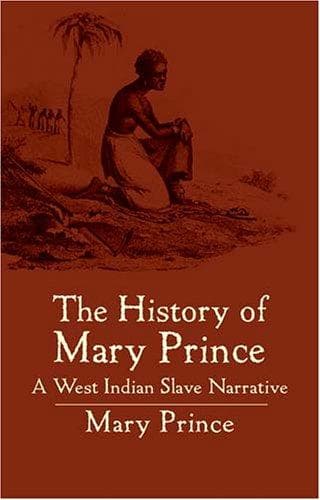
The History of Mary Prince, a West Indian SlavePrince, Mary
History
The History of Mary Prince, a West Indian Slave
Prince, Mary
Fugitive slaves -- West Indies -- Biography; Prince, Mary; Slavery -- West Indies
Of the general character of Mr. and Mrs. Wood, I would not designedly give
any _unfair_ impression. Without implicitly adopting either the _ex parte_
view of Mary Prince, or the unmeasured encomiums of their friends, I am
willing to believe them to be, on the whole, fair, perhaps favourable,
specimens of colonial character. Let them even be rated, if you will, in
the very highest and most benevolent class of slave-holders; and, laying
everything else entirely out of view, let Mr. Wood's conduct in this
affair be tried exclusively by the facts established beyond dispute, and
by his own statement of the case in his letter to Mr. Taylor. But then, I
ask, if the very _best_ and _mildest_ of your slave-owners can act as Mr.
Wood is proved to have acted, what is to be expected of persons whose
mildness, or equity, or common humanity no one will dare to vouch for? If
such things are done in the green tree, what will be done in the dry?--And
what else then can Colonial Slavery possibly be, even in its best estate,
but a system incurably evil and iniquitous?--I require no other data--I
need add no further comment.]
The case affords a most instructive illustration of the true spirit of the
slave system, and of the pretensions of the slave-holders to assert, not
merely their claims to a "vested right" in the _labour_ of their bondmen,
but to an indefeasible property in them as their "absolute chattels." It
furnishes a striking practical comment on the assertions of the West
Indians that self-interest is a sufficient check to the indulgence of
vindictive feelings in the master; for here is a case where a man (a
_respectable_ and _benevolent_ man as his friends aver,) prefers losing
entirely the full price of the slave, for the mere satisfaction of
preventing a poor black woman from returning home to her husband! If the
pleasure of thwarting the benevolent wishes of the Anti-Slavery Society in
behalf of the deserted negro, be an additional motive with Mr. Wood, it
will not much mend his wretched plea.
* * * * *
I may here add a few words respecting the earlier portion of Mary Prince's
narrative. The facts there stated must necessarily rest entirely,--since
we have no collateral evidence,--upon their intrinsic claims to
probability, and upon the reliance the reader may feel disposed, after
perusing the foregoing pages, to place on her veracity. To my judgment,
the internal evidence of the truth of her narrative appears remarkably
strong. The circumstances are related in a tone of natural sincerity, and
are accompanied in almost every case with characteristic and minute
details, which must, I conceive, carry with them full conviction to every
candid mind that this negro woman has actually seen, felt, and suffered
all that she so impressively describes; and that the picture she has given
of West Indian slavery is not less true than it is revolting.
Public-domain text, read in full here on John Shaqi.
Reviews
Reviews
No reviews yet
Be the first to share your thoughts on this work.
Elsewhere in the archive
Join the Discussion
Join the discussion
Sign in to leave a comment or review.
Sign InorCreate an account