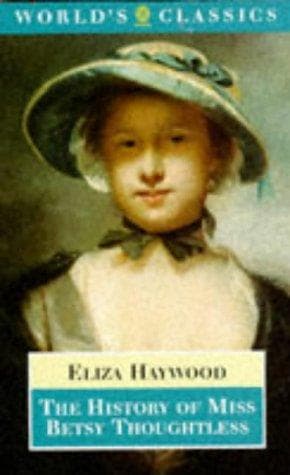
The History of Miss Betsy ThoughtlessHaywood, Eliza Fowler
General
The History of Miss Betsy Thoughtless
Haywood, Eliza Fowler
Abused wives -- Fiction; Bildungsromans; Didactic fiction; England -- Fiction; Married women -- Fiction
After the first compliments were over, neither of them lost, by their
manner of conversation, any part of that admiration which their eyes had
gained. Mrs. Wellair talked pretty much; yet so agreeably, that nobody
could be tired of hearing her. Miss Harriot spoke much less; but all she
said discovered a delicacy of sentiment, and a judgment far above her
years. Sir Bazil had a large estate; he lived up to the height of it;
had a very elegant taste; and, in complaisance to his sisters, as well
as to his friend, who had never dined with him before since he set up
housekeeping, had taken care that day to omit nothing in his bill of
fare that could excite, or gratify, the most luxurious appetite; yet it
was the wit, spirit, and good-humour, of the company, especially of Miss
Harriot, which, to Mr. Trueworth, made the most agreeable part of the
entertainment.
When the dessert was over, and the healths of absent friends toasted in
Tokay and Frontiniac, they all adjourned into the drawing-room; where
coffee and tea were soon brought in. Mrs. Wellair having been advised by
her physicians to refrain from the use of any of those liquors, on
account of some disorder she had complained of, took this opportunity of
desiring leave to retire, in order to acquaint her husband, it being
post-night, with her safe arrival in town.
Agreeable as her conversation was, Mr. Trueworth found no miss of her,
as the lovely Harriot was left behind: on the contrary, he was rather
rejoiced, in the hope she would now give her tongue a greater latitude
than she had done in the presence of one whom, he easily perceived, she
looked upon as her superior in understanding; as well as years; and, to
provoke her to it, artfully introduced some discourse on the pleasures
of the town; and said to Sir Bazil, it seemed to him a kind of miracle,
that so young and beautiful a lady as Miss Harriot could content herself
with the obscurity of a country life. 'Few of her age, indeed,' replied
Sir Bazil, 'could chuse to live in the manner she does; but though I
should, perhaps, not be of the same way of thinking, if I were a woman,
and in her place, yet I cannot but say, my reason approves of her
conduct in this point.'
'London,' said she, 'is a very magnificent, opulent city; and those who
have their lot cast to live in it, may, doubtless, find sufficient to
content them: but as for those amusements, which you gentlemen call the
pleasures of the town, and which so many people take every winter such
long journies merely to enjoy, I can see nothing in them which a
reasonable person may not very well dispense with the want of.'
Public-domain text, read in full here on John Shaqi.
Reviews
Reviews
No reviews yet
Be the first to share your thoughts on this work.
Elsewhere in the archive
Join the Discussion
Join the discussion
Sign in to leave a comment or review.
Sign InorCreate an account