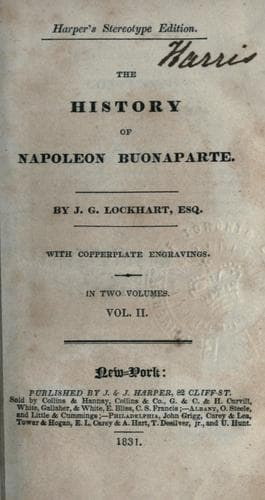
The History of Napoleon BuonaparteLockhart, J. G. (John Gibson)
History
The History of Napoleon Buonaparte
Lockhart, J. G. (John Gibson)
France -- Kings and rulers -- Biography; Napoleon I, Emperor of the French, 1769-1821
The Pope, in acceding to these terms, submitted to "the exigence of the
time--which," said his Holiness in the deed itself, "lays its violence
even upon us." The most bitter point of execution was that which
regarded the bishops--the great majority of whom were yet in exile.
These prelates were summoned to send in, each separately, and within
fifteen days, his acceptance of the terms of the concordat, or his
resignation of his see. Thus taken by surprise, having no means of
consultation, and considering the concordat as fatal to the rights of
the church, and the Pope's assent as extorted by mere necessity, almost
all of them, to their honour be it said, declined complying with either
of these demands. That these bishops should prefer poverty and exile to
submission, was not likely to increase the popularity of the concordat
with the more devout part of the nation. Meantime, the self-called
philosophers looked on with scorn; and the republicans, of every sect,
regarded with anger and indignation a course of policy which, as they
justly apprehended, provided for the re-establishment of the church,
solely because that was considered as the likeliest means of
re-establishing the monarchy--in a new dynasty indeed, but with all, or
more than all, the old powers.
In moments of spleen Napoleon is known to have sometimes expressed his
regret that he should ever have had recourse to this concordat: but at
St. Helena, when looking back calmly, he said that it was so needful a
measure that had there been no Pope, one ought to have been created for
the occasion.
The name of the First Consul was now introduced into the church service
at least as often as that of the king had used to be. The cathedral of
Notre Dame was prepared for the solemn reception of the concordat.
Napoleon appeared there with the state and retinue of a monarch; and in
every part of the ceremonial the ancient rules were studiously attended
to. The prelate who presided was the same Archbishop of Aix who had
preached the coronation sermon of Louis XVI.
Public-domain text, read in full here on John Shaqi.
Reviews
Reviews
No reviews yet
Be the first to share your thoughts on this work.
Elsewhere in the archive
Join the Discussion
Join the discussion
Sign in to leave a comment or review.
Sign InorCreate an account