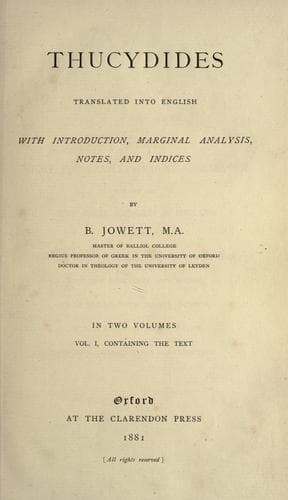
Greece -- History -- Peloponnesian War, 431-404 B.C.
Second Year of the War—The Plague of Athens—Position and Policy of
Pericles—Fall of Potidæa
Such was the funeral that took place during this winter, with which the
first year of the war came to an end. In the first days of summer the
Lacedaemonians and their allies, with two-thirds of their forces as
before, invaded Attica, under the command of Archidamus, son of
Zeuxidamus, King of Lacedaemon, and sat down and laid waste the
country. Not many days after their arrival in Attica the plague first
began to show itself among the Athenians. It was said that it had
broken out in many places previously in the neighbourhood of Lemnos and
elsewhere; but a pestilence of such extent and mortality was nowhere
remembered. Neither were the physicians at first of any service,
ignorant as they were of the proper way to treat it, but they died
themselves the most thickly, as they visited the sick most often; nor
did any human art succeed any better. Supplications in the temples,
divinations, and so forth were found equally futile, till the
overwhelming nature of the disaster at last put a stop to them
altogether.
It first began, it is said, in the parts of Ethiopia above Egypt, and
thence descended into Egypt and Libya and into most of the King’s
country. Suddenly falling upon Athens, it first attacked the population
in Piraeus—which was the occasion of their saying that the
Peloponnesians had poisoned the reservoirs, there being as yet no wells
there—and afterwards appeared in the upper city, when the deaths became
much more frequent. All speculation as to its origin and its causes, if
causes can be found adequate to produce so great a disturbance, I leave
to other writers, whether lay or professional; for myself, I shall
simply set down its nature, and explain the symptoms by which perhaps
it may be recognized by the student, if it should ever break out again.
This I can the better do, as I had the disease myself, and watched its
operation in the case of others.
Public-domain text, read in full here on John Shaqi.
Reviews
Reviews
No reviews yet
Be the first to share your thoughts on this work.
Elsewhere in the archive
Join the Discussion
Join the discussion
Sign in to leave a comment or review.
Sign InorCreate an account