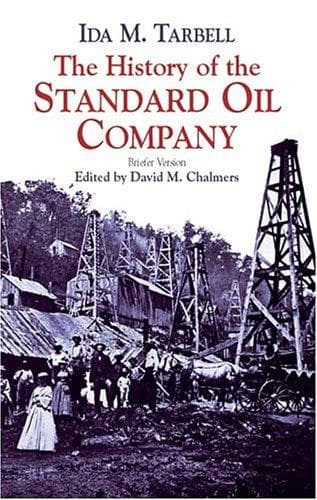
The History of the Standard Oil CompanyTarbell, Ida M. (Ida Minerva)
History
The History of the Standard Oil Company
Tarbell, Ida M. (Ida Minerva)
Petroleum industry and trade -- United States -- History; Standard Oil Company -- History
The upshot of the negotiations was that again the advocates of
combination had to retire from the Oil Regions defeated. “_Sic semper
tyrannis, sic transit gloria_ South Improvement Company,” sneered the
Oil City Derrick, which was given to sprinkling Latin phrases into its
forceful and picturesque English. But the Derrick underrated both the
man and the principle at which it sneered. A great idea was at work in
the commercial world. It had come to them saddled with crime. They now
saw nothing in it but the crime. The man who had brought it to them was
not only endowed with far vision, he was endowed with an indomitable
purpose. He meant to control the oil business. By one manœuvre, and that
a discredited one, he had obtained control of one-fifth of the entire
refining output of the United States. He meant to secure the other
four-fifths. He might retire now, but the Oil Region would hear of him
again. It did. Three months later, in August, 1872, it was learned that
the scheme of consolidation which had been presented in vain at
Titusville in May had been quietly carried out, that four-fifths of the
refining interest of the United States, including many of the creek
refiners, had gone into a National Refiners’ Association, of which Mr.
Rockefeller was president, and one of their own men, J. J. Vandergrift,
was vice-president. The news aroused much resentment in the Oil Regions.
The region was no longer solid in its free-trade sentiment, no longer
undividedly true to its vow that the rebate system as applied to the oil
trade must end. There was an enemy at home. The hard words which for
months men had heaped on the distant heads of Cleveland and Pittsburg
refiners, they began to pour out, more discreetly to be sure, on the
heads of their neighbours. It boded ill for the interior peace of the
Oil Regions.
The news that the refiners had actually consolidated aroused something
more than resentment. The producers generally were alarmed. If the
aggregation succeeded they would have one buyer only for their product,
and there was not a man of them who believed that this buyer would ever
pay them a cent more than necessary for their oil. Their alarm aroused
them to energy. The association which had scattered the South
Improvement Company was revived, and began at once to consider what it
could do to prevent the consolidated refiners getting the upper hand in
the business.
Public-domain text, read in full here on John Shaqi.
Reviews
Reviews
No reviews yet
Be the first to share your thoughts on this work.
Elsewhere in the archive
Join the Discussion
Join the discussion
Sign in to leave a comment or review.
Sign InorCreate an account