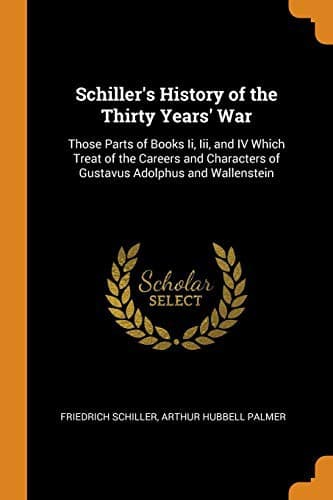
The History of the Thirty Years' WarSchiller, Friedrich
History
The History of the Thirty Years' War
Schiller, Friedrich
Europe -- History -- 1517-1648; Thirty Years' War, 1618-1648
The most urgent want was that of a general; and the only one from whom
he could hope for the revival of his former splendour, had been removed
from his command by an envious cabal. So low had the Emperor now fallen,
that he was forced to make the most humiliating proposals to his injured
subject and servant, and meanly to press upon the imperious Duke of
Friedland the acceptance of the powers which no less meanly had been
taken from him. A new spirit began from this moment to animate the
expiring body of Austria; and a sudden change in the aspect of affairs
bespoke the firm hand which guided them. To the absolute King of Sweden,
a general equally absolute was now opposed; and one victorious hero
was confronted with another. Both armies were again to engage in the
doubtful struggle; and the prize of victory, already almost secured in
the hands of Gustavus Adolphus, was to be the object of another and a
severer trial. The storm of war gathered around Nuremberg; before its
walls the hostile armies encamped; gazing on each other with dread and
respect, longing for, and yet shrinking from, the moment that was to
close them together in the shock of battle. The eyes of Europe turned to
the scene in curiosity and alarm, while Nuremberg, in dismay, expected
soon to lend its name to a more decisive battle than that of Leipzig.
Suddenly the clouds broke, and the storm rolled away from Franconia, to
burst upon the plains of Saxony. Near Lutzen fell the thunder that had
menaced Nuremberg; the victory, half lost, was purchased by the death
of the king. Fortune, which had never forsaken him in his lifetime,
favoured the King of Sweden even in his death, with the rare privilege
of falling in the fulness of his glory and an untarnished fame. By a
timely death, his protecting genius rescued him from the inevitable fate
of man -- that of forgetting moderation in the intoxication of success,
and justice in the plenitude of power. It may be doubted whether, had he
lived longer, he would still have deserved the tears which Germany shed
over his grave, or maintained his title to the admiration with which
posterity regards him, as the first and only JUST conqueror that the
world has produced. The untimely fall of their great leader seemed to
threaten the ruin of his party; but to the Power which rules the world,
no loss of a single man is irreparable. As the helm of war dropped from
the hand of the falling hero, it was seized by two great statesmen,
Oxenstiern and Richelieu. Destiny still pursued its relentless course,
and for full sixteen years longer the flames of war blazed over the
ashes of the long-forgotten king and soldier.
Public-domain text, read in full here on John Shaqi.
Reviews
Reviews
No reviews yet
Be the first to share your thoughts on this work.
Elsewhere in the archive
Join the Discussion
Join the discussion
Sign in to leave a comment or review.
Sign InorCreate an account