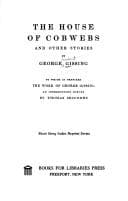
The House of Cobwebs and Other StoriesGissing, George
General
The House of Cobwebs and Other Stories
Gissing, George
Great Britain -- Social life and customs -- 19th century -- Fiction; Short stories
Necessarily, Mr. Farmiloe entered into negotiation with the postal
authorities; and it was with some little disappointment that he learnt how
very modest could be his direct remuneration for the responsibilities and
labours he undertook. The Post-Office is a very shrewdly managed department
of the public service; it has brought to perfection the art of obtaining
_maximum_ results with a _minimum_ expenditure. But Mr. Farmiloe remembered
the other aspect of the matter; he would benefit so largely by this
ill-paid undertaking that grumbling was foolish. Moreover, the thing
carried dignity with it; he served his Majesty, he served the nation.
And--ha, ha!--how very odd it would be to post one's letters in one's own
post-office. One might really get a good deal of amusement out of the
thought, after business hours. His age was eight-and-thirty. For some years
he had pondered matrimony, though without fixing his affections on any
particular person. It was plain, indeed, that he ought to marry. Every
tradesman is made more respectable by wedlock, and a chemist who, in some
degree, resembles a medical man, seems especially to stand in need of the
matrimonial guarantee. Had it been feasible, Mr. Farmiloe would have
brought a wife with him from the town where he had lived for the past few
years, but he was in the difficult position of knowing not a single
marriageable female to whom he could address himself with hope or with
self-respect. Natural shyness had always held him aloof from reputable
women; he felt that he could not recommend himself to them--he who had such
an unlucky aptitude for saying the wrong word or keeping silence when
speech was demanded. With the men of his acquaintance he could relieve his
sense of awkwardness and deficiency by becoming aggressive; in fact, he had
a reputation for cantankerousness, for pugnacity, which kept most of his
equals in some awe of him, and to perceive this was one solace amid many
discontents. Nicely dressed and well-spoken and good-looking women above
the class of domestic servants he worshipped from afar, and only in
vivacious moments pictured himself as the wooer of such a superior being.
Public-domain text, read in full here on John Shaqi.
Reviews
Reviews
No reviews yet
Be the first to share your thoughts on this work.
Elsewhere in the archive
Join the Discussion
Join the discussion
Sign in to leave a comment or review.
Sign InorCreate an account