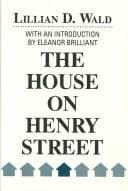
Henry Street Settlement (New York, N.Y.); Poor -- New York (State) -- New York
Occasionally a zealot seeks to rekindle in the churches of our
neighborhood the fire that once brightened their altars, and social
workers hailed one as “comrade” who ventured to bring the infamy of the
red-light district to the knowledge of his bishop and the city. That
bishop, humane and socially minded, came down for a short time to live
among us, and in the evenings when he crossed the crowded street to call
or to dine with us he dwelt upon the pleasure he had in learning to know
the self-respect and dignity of his East Side parishioners. He spoke
with gratification of the fact that during his stay downtown no begging
letters had come to him from the neighborhood, nor had anyone belonging
to it taken advantage of his presence to ask for personal favors. The
neighborhood took his presence quite simply, regretting, with him, the
spectacular featuring of his visit by the newspapers. Indeed, the only
cynical comment that came to my ears was from a young radical, who,
hearing of the bishop’s tribute, said: “That’s nothing new. It’s only new
to a bishop.”
In the Roman Catholic churches the change is most marked by the dwindling
of the large Irish congregations and the coming of the Italians. Patron
saints’ days are celebrated with pomp and elaborate decoration. Arches
of light festoon the streets, altars are erected on the sidewalk, and
the image of the saint is enshrined on the church facade high above the
passer-by. Threading in and out of the throngs are picturesquely shawled
women with lovely babes in arms, fakirs and beggars, venders offering for
sale rosaries, candles, and holy pictures. Mulberry, Elizabeth and even
Goerck Streets’ sordid ugliness is then transformed for the time, and a
clew is given to the old-world influence of the Church through drama.
* * * * *
The change from the Russian pale where the rabbi’s control is both
civil and spiritual to a new world of complex religious and political
authority, or lack of authority, accentuates the difficulties of
readjustment for the pious Jew. The Talmudic students, cherished in the
old country and held aloof from all questions of economic needs because
of their learning and piety, find themselves without anchor in the new
environment and precipitated into entirely new valuations of worth and
strength.
Public-domain text, read in full here on John Shaqi.
Reviews
Reviews
No reviews yet
Be the first to share your thoughts on this work.
Elsewhere in the archive
Join the Discussion
Join the discussion
Sign in to leave a comment or review.
Sign InorCreate an account