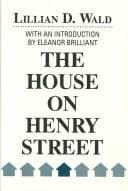
Henry Street Settlement (New York, N.Y.); Poor -- New York (State) -- New York
I recall the indignation of a young man, just graduated from one of
our universities, when chance took him into an East Side hall where a
well-known anarchist was addressing a large and attentive audience and
reading selections from Thoreau. Without any obvious provocation the
police jumped upon the platform, arrested the woman and those who sat
with her, refused them permission to call a cab, and drove them in the
patrol wagon to the police station. At the time there was no limit to
which this man would not have gone to show his resentment against the
injustice of the proceeding, and it was some relief to his chivalrous
spirit to testify against the police and to use the settlement’s
experience in giving publicity to the occurrence.
Something of this menace to cherished American institutions lay in the
occurrences at Lawrence, Massachusetts, during the winter of 1912.
Unsatisfactory labor conditions gave the Industrial Workers of the World
an opportunity to capture the loyalty and devotion of the discontented
operatives. Reports of the unwarranted action of police and militia
during a strike that ensued, the imprisonment of the strike leaders, and
the difficulty of securing for them an impartial hearing were incidents
too serious to be lightly dismissed from the mind. I went to Lawrence at
that time, and came away reflecting with sadness on the manifestations
there of how slight is our hold upon civilization, how insecure our
reliance upon the courts for justice when feelings run high.
The operatives’ story had not reached the general public, and I offered
the House on Henry Street as one medium for informing people in New York
who had no link with the working people.
A participant in the strike came to us to tell the story, and her
presentation, on the whole, seemed fair and reasonable. It was no less
an indictment of the leaders of the established labor organizations for
failure to unionize the workers, and thereby secure better wages and
shorter hours, than of the capitalist, who, the speaker thought, should
be held responsible for creating the conditions.
The reaction of the audience was definite—that the workers should have
tangible assurance of the existence of an American sentiment for justice,
and money came spontaneously to the settlement to be sent to the strikers
and toward the cost of the defense of the prisoners. The New York press,
on the whole, gave fair interpretation of the causes of discontent and
the disturbing consequences to society of what appeared to some observers
to be anarchistic methods on the part of those in authority.
* * * * *
The Social Reform Club, organized in 1894, was a factor in helping to
stimulate a more general public interest in matters of social concern.
Public-domain text, read in full here on John Shaqi.
Reviews
Reviews
No reviews yet
Be the first to share your thoughts on this work.
Elsewhere in the archive
Join the Discussion
Join the discussion
Sign in to leave a comment or review.
Sign InorCreate an account