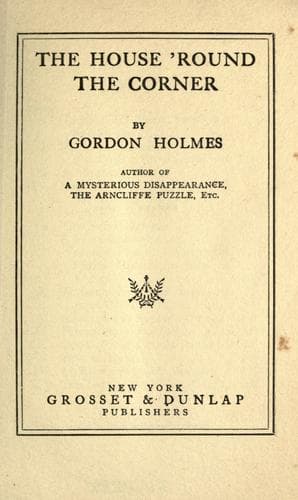
Mystery fiction; Yorkshire (England) -- Social life and customs -- Fiction
"Though convinced that he was dead, I hoped against hope for some hours.
Then _rigor mortis_ set in, and I knew that the only man who had ever
inflicted an injury on my good name had struck his last and shrewdest
blow by dying in my house. I want you to consider the position I was in.
A man, a stranger, was lying there dead, in circumstances that demanded
an inquest. I had not called for a doctor, or obtained any assistance
locally. I had sent my wife and daughter to a foreign country, obviously
to get them out of the way. A _post-mortem_ examination would show that
death had taken place nearly a day before I made any stir. If I
destroyed certain documents in my brother's possession--such, for
instance, as a ticket of leave, which he had retained long after its
expiry for the mere purpose, I firmly believe, of bringing pressure to
bear on me--there would be nothing to show his identity. In a word,
there was a _prima facie_ case of murder ready to be established against
me. Of course, the medical evidence would go to prove my innocence, but
all the world--all of my small world, at any rate--would gape and gossip
because of the scandal which my wife and I had given more than twenty
years of our life to escape. For the sake of my wife and daughter I
resolved upon a daring expedient. The 'Ogilvey fraud' of a previous
generation was forgotten. Why should I not resume my own name, and let
my brother die and be buried as Stephen Garth? I saw that my own
behavior during the past week would help the assumption that I had
committed suicide, while a rather marked resemblance between my brother
and myself, together with the fact that he had died from apoplexy, would
complete the illusion. Moreover, there exists, in connection with this
very house, a curious legend which condemned seven generations of its
owners to die by violence, either self-inflicted, or caused by others.
James Ogilvey's death was the seventh, and I trusted to this alleged
prophecy of a Spanish priest put to death by a sea-rover named Faulkner
in the seventeenth century being sufficiently well known in connection
with a shadow, or manifestation, cast on the wall by a stained-glass
window in the staircase.
"At any rate, I steeled my heart to a dreadful undertaking, dressed my
brother in my own clothes, tied his body to a hook in the hall where
the shadow I have spoken of is seen at this time of the year, and stole
away across the moor after writing a letter to the coroner.
Public-domain text, read in full here on John Shaqi.
Reviews
Reviews
No reviews yet
Be the first to share your thoughts on this work.
Elsewhere in the archive
Join the Discussion
Join the discussion
Sign in to leave a comment or review.
Sign InorCreate an account