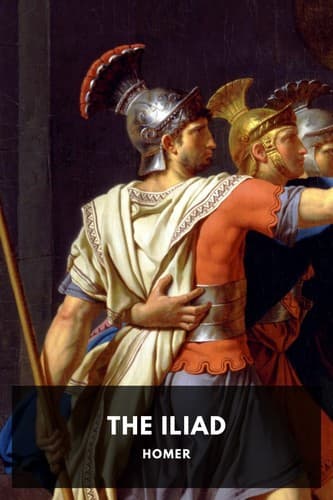
Achilles (Mythological character); Classical literature; Epic poetry, Greek -- Translations into English; Trojan War
Thus spoke Polydamas and his saying pleased Hector, who sprang in
full armour to the ground, and all the other Trojans, when they
saw him do so, also left their chariots. Each man then gave his
horses over to his charioteer in charge to hold them ready for
him at the trench. Then they formed themselves into companies,
made themselves ready, and in five bodies followed their leaders.
Those that went with Hector and Polydamas were the bravest and
most in number, and the most determined to break through the wall
and fight at the ships. Cebriones was also joined with them as
third in command, for Hector had left his chariot in charge of a
less valiant soldier. The next company was led by Paris,
Alcathous, and Agenor; the third by Helenus and Deiphobus, two
sons of Priam, and with them was the hero Asius—Asius, the son of
Hyrtacus, whose great black horses of the breed that comes from
the river Selleis had brought him from Arisbe. Aeneas, the
valiant son of Anchises, led the fourth; he and the two sons of
Antenor, Archelochus and Acamas, men well versed in all the arts
of war. Sarpedon was captain over the allies, and took with him
Glaucus and Asteropaeus whom he deemed most valiant after
himself—for he was far the best man of them all. These helped to
array one another in their ox-hide shields, and then charged
straight at the Danaans, for they felt sure that they would not
hold out longer and that they should themselves now fall upon the
ships.
Public-domain text, read in full here on John Shaqi.
Reviews
Reviews
No reviews yet
Be the first to share your thoughts on this work.
Elsewhere in the archive
Join the Discussion
Join the discussion
Sign in to leave a comment or review.
Sign InorCreate an account