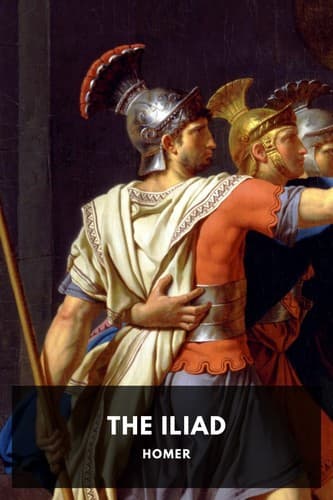
Achilles (Mythological character); Epic poetry, Greek -- Translations into English; Trojan War
Thus also have we heard
the renown of heroes of former days, when vehement wrath came upon any,
[that] they were both appeasable by gifts, and to be reconciled by
words. I remember this ancient and by no means modern deed, of what
sort it was; and I will repeat it among you all, being friends. The
Curetes and Ætolians, obstinate in battle, fought around the city of
Calydon, and slaughtered each other; the Ætolians, in defence of lofty
Calydon, the Curetes, eager to lay it waste in war; for between them
had golden-throned Diana excited mischief, indignant because Œneus had
not offered the first-fruits in sacrifice in the fertile spot of
ground: 319 whilst the other gods feasted on hecatombs, but to the
daughter of mighty Jove alone he sacrificed not. Either he forgot, 320
or did not think of it, but he did greatly err in mind. But she, the
daughter of Jove, delighting in arrows, enraged, sent against [him] a
sylvan wild boar, with white tusks, which did much detriment, as is the
wont [of boars], to the land of Œneus. And many tall trees, one after
another, did he prostrate on the ground, with their very roots and the
blossom of their fruit. But him Meleager, son of Œneus, slew,
assembling huntsmen and dogs from many cities; for he would not have
been subdued by a few mortals: so mighty was he, and he caused many to
ascend the sad funeral-pile. Still she (Diana) excited around him 321 a
great tumult and war between the Curetes and magnanimous Ætolians, for
the head and bristly skin of the boar. 322 Whilst warlike Meleager
fought, so long were the Curetes unsuccessful; nor were they able,
although numerous, to remain without the wall. But when wrath, which
swells the minds of others, though very prudent, within their breasts,
came upon Meleager, for, enraged at heart with his dear mother Althæa,
he remained inactive beside his wedded wife, fair Cleopatra, daughter
of Marpessa, the handsome-footed child of Evenus and Idas, who was then
the bravest of earthly men, and even lifted a bow against king Phœbus
Apollo, for the sake of his fair-ankled spouse. Her [Cleopatra] then
her father and venerable mother in the palace were accustomed to call
by the surname of Alcyone, because her mother, having the plaintive
note of sad Alcyone, 323 lamented when far-darting Phœbus Apollo stole
her away. Beside her he [Meleager] remained inactive, brooding 324 over
his sad anger, enraged because of the curses of his mother, who, much
grieving, prayed to the gods on account of the murder of her brethren.
325 Often with her hands did she strike the fruitful earth, calling
upon Pluto and dread Proserpine, reclining upon her knees, whilst her
bosom was bedewed with tears, to give death to her son: but her the
Erinnys, wandering in gloom, possessing an implacable heart, heard from
Erebus. Then immediately was there noise and tumult of these 326
excited round the gates, the towers being battered. Then did the elders
Public-domain text, read in full here on John Shaqi.
Reviews
Reviews
No reviews yet
Be the first to share your thoughts on this work.
Elsewhere in the archive
Join the Discussion
Join the discussion
Sign in to leave a comment or review.
Sign InorCreate an account