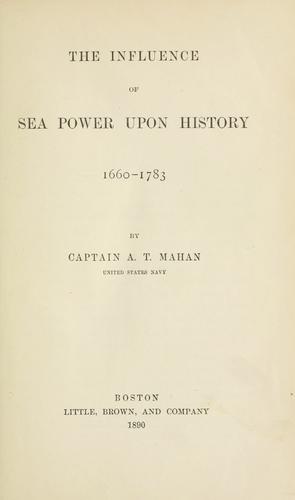
The Influence of Sea Power Upon History, 1660-1783Mahan, A. T. (Alfred Thayer)
History
The Influence of Sea Power Upon History, 1660-1783
Mahan, A. T. (Alfred Thayer)
Naval history, Modern; Sea-power
The Regent Orleans, under the advice of the most able and celebrated
French statesman of that day, the Abbé Dubois, made overtures of
alliance to the King of Great Britain. He began first by commercial
concessions of the kind generally acceptable to the English,
forbidding French shipping to trade to the South Seas under penalty of
death, and lowering the duties on the importation of English coal.
England at first received these advances warily; but the regent would
not be discouraged, and offered, further, to compel the Pretender,
James III., to withdraw beyond the Alps. He also undertook to fill up
the port at Mardyck, a new excavation by which the French government
was trying to indemnify itself for the loss of Dunkirk. These
concessions, all of which but one, it will be noted, were at the
expense of the sea power or commercial interests of France, induced
England to sign a treaty by which the two countries mutually
guaranteed the execution of the treaties of Utrecht as far as their
respective interests were concerned; especially the clause by which
the House of Orleans was to succeed to the French throne, if Louis XV.
died childless. The Protestant succession in England was likewise
guaranteed. Holland, exhausted by the war, was unwilling to enter upon
new engagements, but was at last brought over to this by the remission
of certain dues on her merchandise entering France. The treaty, signed
in January, 1717, was known as the Triple Alliance, and bound France
to England for some years to come.
Public-domain text, read in full here on John Shaqi.
Reviews
Reviews
No reviews yet
Be the first to share your thoughts on this work.
Elsewhere in the archive
Join the Discussion
Join the discussion
Sign in to leave a comment or review.
Sign InorCreate an account