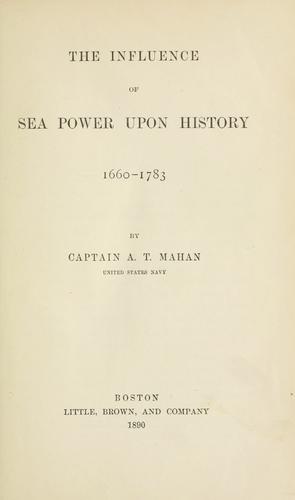
The Influence of Sea Power Upon History, 1660-1783Mahan, A. T. (Alfred Thayer)
History
The Influence of Sea Power Upon History, 1660-1783
Mahan, A. T. (Alfred Thayer)
Naval history, Modern; Sea-power
Between three and four thousand
officers and men, including Admiral Hosier himself, died there.
Walpole's aim, however, was reached; though Spain made a foolish
attack by land upon Gibraltar, the presence of the English fleet
assured its supplies and provisions and averted the formal outbreak of
war. The emperor withdrew from the alliance, and under English
pressure also revoked the charter of an East India company which he
had authorized in the Austrian Netherlands, and which took its name
from the port of Ostend. English merchants demanded the removal of
this competitor, and also of a similar rival established in Denmark;
both which concessions the English ministry, backed by Holland,
obtained. So long as commerce was not seriously disturbed, Walpole's
peace policy, accompanied as it naturally was by years of plenty and
general content, was easily maintained, even though Spain continued
threatening and arrogant in her demands for Gibraltar; but
unfortunately she now entered more deeply upon a course of annoyance
to English trade. The concessions of the Asiento, or slave-trade, and
of the annual ship to South America have been mentioned; but these
privileges were but a part of the English commerce in those regions.
The system of Spain with regard to the trade of her colonies was of
the narrowest and most exclusive character; but, while attempting to
shut them out from foreign traffic, she neglected to provide for their
wants herself. The consequence was that a great smuggling or
contraband trade arose throughout her American possessions, carried on
mainly by the English, who made their lawful traffic by the Asiento
and the yearly ship subserve also the unlawful, or at least
unauthorized, trade. This system was doubtless advantageous to the
great body of the Spanish colonists, and was encouraged by them, while
colonial governors connived at it, sometimes for money, sometimes
swayed by local public opinion and their own knowledge of the
hardships of the case; but there were Spanish subjects who saw their
own business injured by the use and abuse of English privileges, and
the national government suffered both in pocket and in pride by these
evasions of the revenue. It now began to pull the strings tighter.
Obsolete regulations were revived and enforced. Words in which the
action of Spain in this old controversy have been described are
curiously applicable to certain recent disputes to which the United
States has been a party. "The letter of the treaty was now followed,
though the spirit which dictated it was abandoned. Although English
ships still enjoyed the liberty of putting into Spanish harbors for
the purpose of refitting and provisioning, yet they were far from
enjoying the same advantages of carrying on a friendly and commercial
intercourse. They were now watched with a scrupulous jealousy,
strictly visited by guarda-costas, and every efficient means adopted
to prevent any commerce with the colonies, except what was allowed by
Public-domain text, read in full here on John Shaqi.
Reviews
Reviews
No reviews yet
Be the first to share your thoughts on this work.
Elsewhere in the archive
Join the Discussion
Join the discussion
Sign in to leave a comment or review.
Sign InorCreate an account